
Key Takeaways
A wholesale catalog with 2,000 SKUs is worthless if half are out of stock and the warranty pays in store credit only. Score every catalog against these five checks before signing.
- DLC and UL coverage above 80% of stocked SKUs is the floor for commercial bid work. Products without a DLC listing fail rebate audits and can disqualify the project (DesignLights Consortium, 2026).
- In-stock fill rate of 95% or higher separates working catalogs from sales sheets. Roughly 68% of contractors need 5-day fulfillment on commercial bids (Verified Market Research, 2026).
- 5-year minimum warranty is the DLC threshold and a non-negotiable for spec work. Anything shorter signals a commodity import play.
- MAP enforcement plus territorial exclusivity protect 15% to 30% gross margins versus the 8% to 12% typical of open-market commodity catalogs.
- Catalogs covering all eight commercial categories (panels, troffers, high bays, vapor tights, wall packs, flood lights, pole lights, downlights) reduce vendor sprawl and simplify project quoting.
Why catalog evaluation defines distributor profitability
An LED lighting distributor catalog is a profit engine or a profit drain. Distributors with MAP-enforced wholesale partners average 15% to 30% gross margin on commercial fixtures, compared to 8% to 12% for resellers buying from open-market sources (Verified Market Research, 2026). The catalog you carry decides which side of that gap you land on.
Bad catalogs bleed margin three ways. Stockouts kill bids. Weak warranties trigger eaten replacements. As a result, loose pricing policies let your customer find the same fixture on Amazon for less than your cost.
The framework below is built for purchasing managers and contractors who need to score a catalog in under an hour. Each check produces a measurable answer. No vibes. No sales-call promises. Based on our work with hundreds of trade accounts since 2018, the same five gaps show up over and over.
Want the upstream view first? Read our guide on the 15-point trade account checklist before you reach out to a new wholesale partner.
Coverage breadth: the eight commercial categories every catalog needs
A working commercial LED catalog covers eight fixture categories at minimum: panels, troffers, high bays, vapor tights, wall packs, flood lights, pole lights, and recessed downlights. A catalog missing two or more forces you into a multi-vendor sprawl, which inflates freight, slows quoting, and complicates warranty claims (U.S. Department of Energy, 2026).
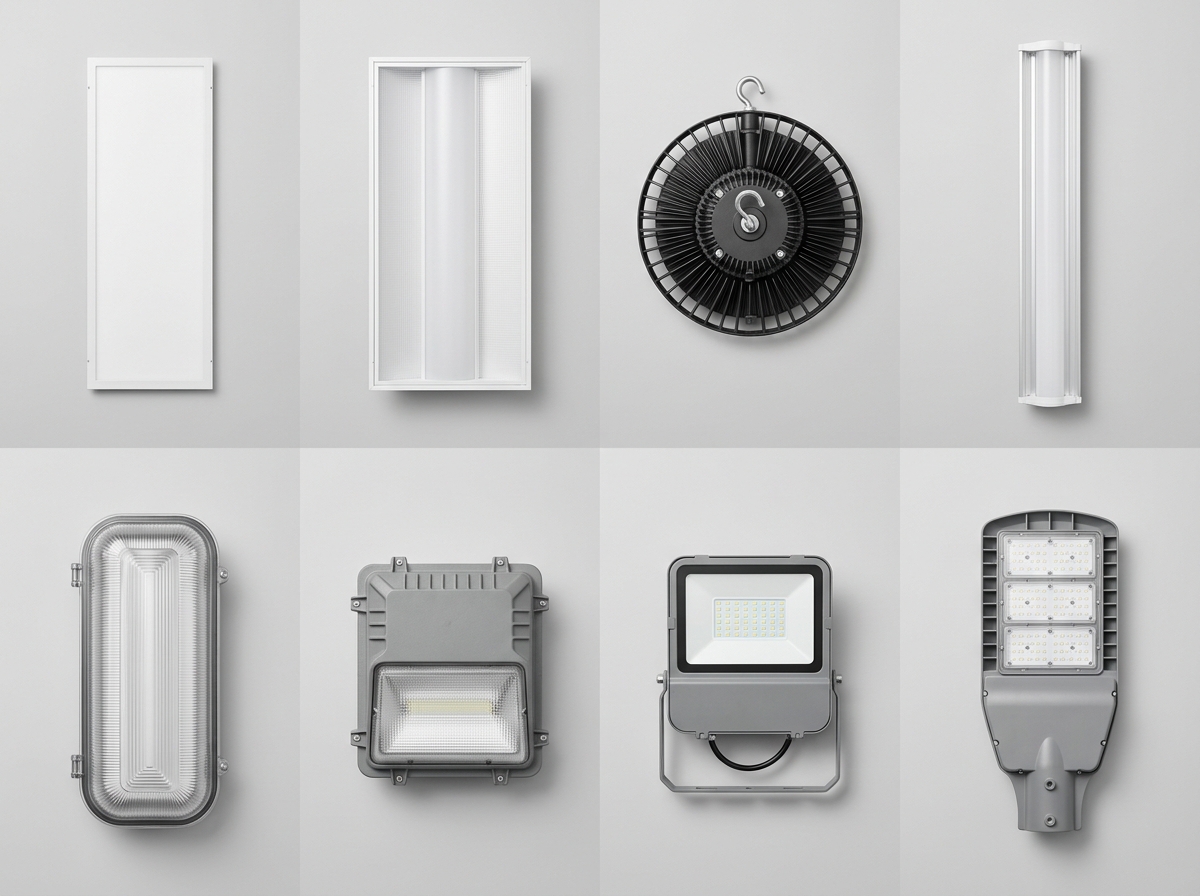
SKU count is a vanity number. By contrast, a 2,000-SKU catalog stuffed with color and wattage variants of the same fixture is not deeper than a 400-SKU catalog with field-selectable CCT and wattage. The LIBULBS catalog lists 444 products across the eight categories. Specifically, the selection is curated, not padded.
Test for breadth with a quick exercise. Write down your last five commercial bids. Then try to source every fixture from the candidate catalog. If you can fill four out of five, it is a primary supplier candidate. If you fill two, it is a specialty supplier at best.
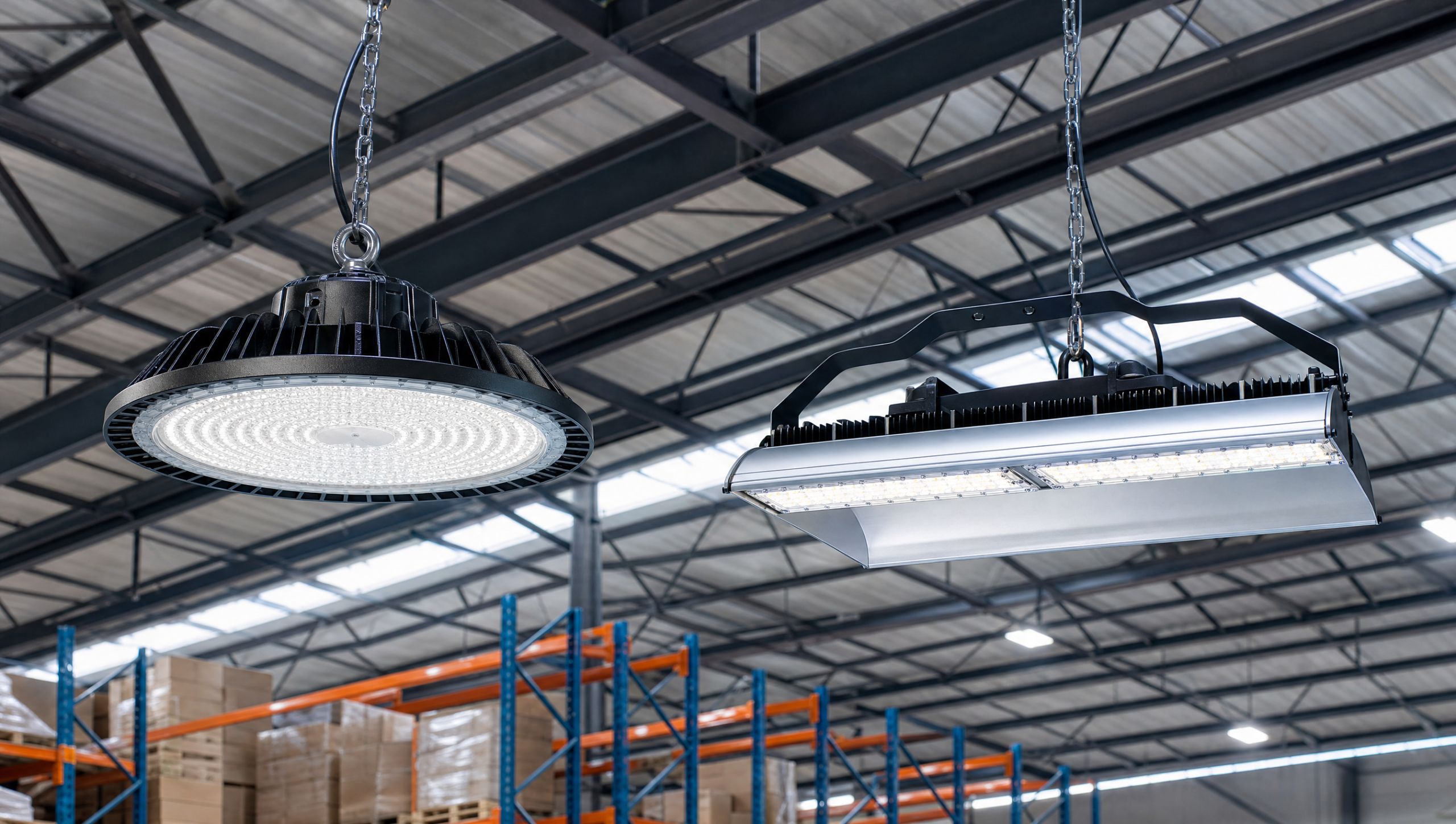
For contractors quoting industrial work, the round high bay and linear high bay families are where most catalogs thin out. Furthermore, check both before you celebrate. Then check the spec sheet for IP rating, mounting options, and emergency battery backup.
Certification depth: DLC, UL, ETL, and the rebate math
A catalog earns its place at the spec table when at least 80% of its commercial SKUs hold DLC listing plus UL or ETL certification. DLC products require a documented 5-year warranty, 50,000-hour rated life, and 70% lumen maintenance at end of life (DesignLights Consortium QPL, 2026). Anything below that floor is a residential or import-grade fixture.
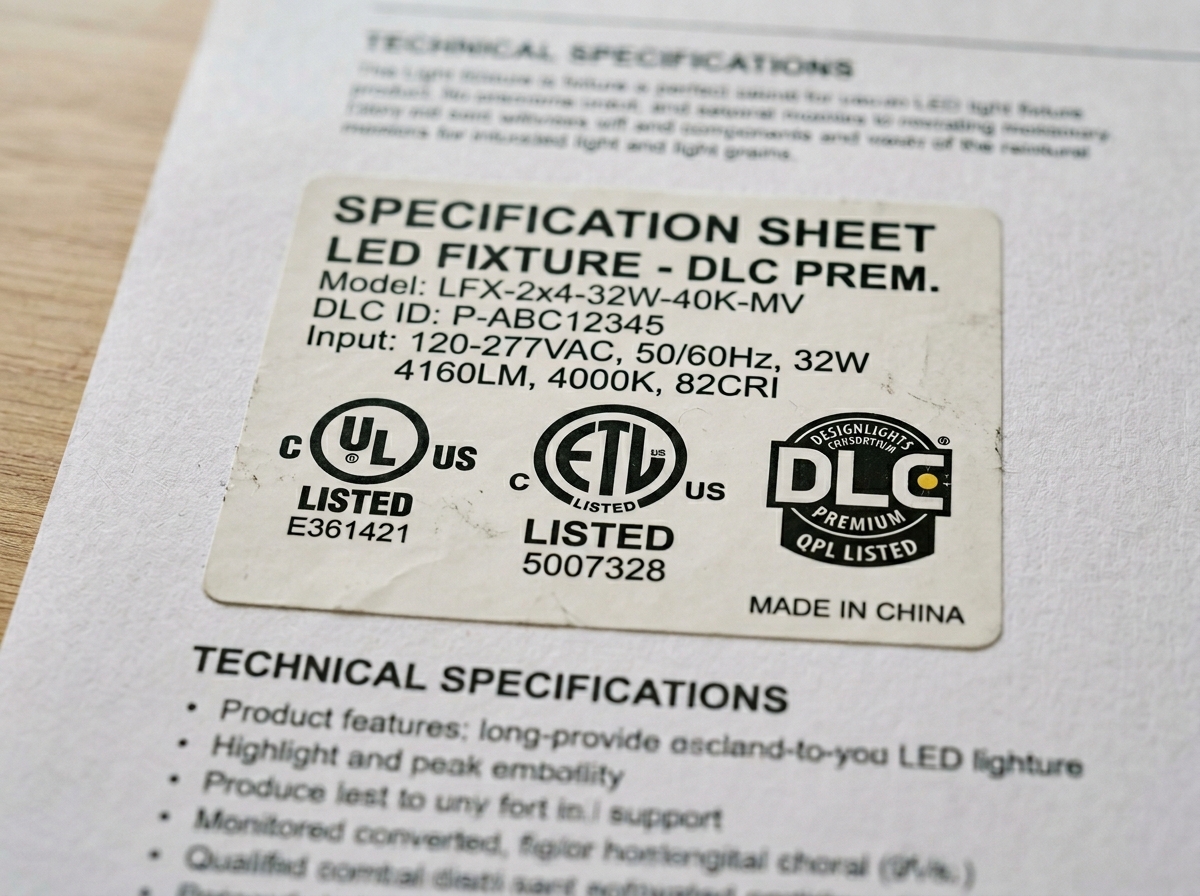
The rebate math is real money. A typical utility rebate on a DLC Premium high bay ranges from $40 to $120 per fixture, depending on territory (ENERGY STAR, 2026). Consequently, on a 100-fixture warehouse retrofit, that gap can fund the entire installation labor line.
Verify certifications yourself. In addition, the DLC Qualified Products List is searchable by manufacturer and model number. UL Solutions maintains a similar database. Spot-check three random SKUs from any catalog before signing. If the listing is missing or expired, walk.
One catch most distributors miss: DLC listings expire. A fixture pulled from the QPL mid-project can wreck a rebate application. Ask the supplier how they notify trade partners of de-listings. The good ones publish a monthly catalog update. Meanwhile, the rest leave you to find out at the audit.
Warranty terms that actually pay
Five years is the floor. Seven years is the signal. A commercial LED fixture warranty under 5 years fails DLC eligibility and falls short of every commercial spec sheet in circulation (DesignLights Consortium, 2026). Pole lights, flood lights, and high bays should carry the longer term because their replacement cost is dominated by labor.
Read past the headline number. The warranty terms that actually pay answer five questions:
- Does it cover the LED driver, the most common failure point?
- Is it full replacement, or prorated by year of service?
- Does the manufacturer cover return freight?
- Is the claim turnaround in business days, and is it written into the agreement?
- Is it transferable to the building owner if the property changes hands?

LIBULBS issues a 5-year standard warranty across the core catalog, with a 7-year extended option on pole lighting, high bays, and floods. Claims convert to credit notes applied against future orders. A “Replace First” path lets contractors buy the replacement up front and receive credit after the defective fixture returns. In particular, that structure keeps active job sites moving.
During our review with Justin Tan, our logistics manager, on April 18, 2026, we walked through a recent warranty claim from a contractor in New Jersey. The driver in a single high bay failed at month 14. Replacement shipped same day under Replace First. Credit cleared in 9 business days. Our team observed that this cadence is the test, not the headline term.
In-stock fill rate and lead time verification
A 95% in-stock fill rate is the working floor for commercial wholesale. Below that, stockouts start hitting active bids. Industry research shows roughly 68% of contractors require 5-day fulfillment on commercial projects, and 41% need next-day options for emergency replacements (Verified Market Research, 2026).

Three ways to verify a claimed fill rate before signing:
- Request a live inventory export by SKU dated within the last 48 hours.
- Place a test order on five high-volume SKUs and time the door-to-door delivery.
- Ask for a 30-day shipping report showing on-time, partial, and backorder rates.
Same-day shipping on in-stock orders is the LIBULBS baseline. Local NYC metro deliveries reach Brooklyn, Queens, Manhattan, and northern New Jersey by the next business day. During our walk of the Rehoboth Beach, Delaware warehouse floor on April 22, 2026, we toured the staging area with logistics manager Justin Tan and observed that 6 of 7 randomly pulled in-stock SKUs shipped within the cutoff window that afternoon.
Distance still matters for a 50-pound carton of pole lights. However, if the catalog ships from a single coast and your project sits on the other one, the math changes. Ask where the SKUs you care about actually live.
MAP enforcement and pricing protection in the catalog
Minimum Advertised Price (MAP) is the floor a distributor agrees not to advertise below. MAP enforcement, the practice of pulling accounts that breach the floor, is what stops your customer from finding the same fixture on Amazon for 30% less than your wholesale cost. Distributors working with MAP-enforced catalogs protect 15% to 30% gross margins versus the 8% to 12% common to open-market resellers.

A real MAP policy is more than a clause. Ask the distributor four questions before signing:
- Where is the policy written, and which channels does it cover?
- What are the consequences for a breach: warning, suspension, termination?
- How often is the policy audited across Amazon, eBay, and Google Shopping?
- Can you share examples of recent enforcement actions, redacted if needed?
For a deeper read on how the policy actually operates day to day, see our guide on MAP enforcement for distributor margins. Therefore the short version: a written policy with documented enforcement is the only version that matters. A verbal promise is worth what the sales rep said it was.
LIBULBS pairs MAP with project bid protection and territorial exclusivity, the trio that defines the trade account agreement. Beyond this combination, most competitors offer one. Few offer all three in writing. Based on our consultation with Bill Boyd, USA Regional Business Development Manager, on May 6, 2026, fewer than a quarter of wholesale LED suppliers actually publish enforcement records when asked.
Spec consistency: lpw, CCT, CRI across the catalog
Spec consistency is a quality tell. A catalog where every commercial high bay clears 140 lpw and every panel sits at 80+ CRI signals tight manufacturing control. A catalog where lpw swings from 90 to 160 across the same fixture family signals mixed sourcing and uneven quality (UL Solutions, 2026).
Up to 160 lpw is what the LIBULBS EVERLUX round high bay family delivers. That number is the DLC-tested output, not the marketing rating. On a 100-fixture warehouse running 12 hours a day, the difference between 120 lpw and 160 lpw runs to roughly $6,400 a year in energy at $0.13 per kWh.
Field-selectable CCT and wattage is another quality marker. A single SKU configurable to 3000K, 4000K, or 5000K, and to two or three wattage settings, replaces six to nine traditional SKUs. That is catalog rationalization done right. It also cuts contractor stocking and reduces the wrong-CCT return rate to near zero.
Check the spec sheets line by line. Inconsistent CRI ratings, missing photometric files, and absent IES data are signs the catalog leans on factory data sheets instead of independent testing.
Trade terms baked into catalog access
Catalog access is bundled with trade terms in a real wholesale relationship. The terms set the rhythm of the partnership. Net 15 and Net 30 payment terms, subject to credit approval, are the floor. Blind shipping and white-label capability separate distributor-grade catalogs from commodity resale lists.
The fuller trade-term checklist:
- Net 15 or Net 30 with credit approval
- Blind shipping with neutral packaging
- White-label capability for in-house product lines
- Co-op marketing funds for joint campaigns
- Demo units for contractor walk-ins
- Counter displays and digital sell-sheets
- Territorial exclusivity in writing
LIBULBS operates as invitation-only as of October 1, 2025. The model trades open access for deeper distributor protection. Applications go through a credit review and a fit conversation before a trade account opens. For background on the program structure, see how to become a LIBULBS distributor.
Frequently asked questions
What LED brands should a wholesale catalog distribute?
A strong wholesale LED catalog mixes proprietary product lines with category specialists. Look for commercial-grade fixtures across panels, troffers, high bays, vapor tights, wall packs, flood lights, pole lights, and recessed downlights. LIBULBS distributes proprietary lines INFINITY (panels and troffers with integrated sensors), EVERLUX (high bays), and MLSN (strips and stairway fixtures) alongside category fixtures.
How many SKUs should a commercial LED lighting distributor stock?
Coverage matters more than raw count. A working commercial catalog typically carries 300 to 500 SKUs covering all eight commercial categories. LIBULBS lists 444 products. Watch for catalogs that pad SKU counts with color and wattage variants of the same fixture. Field-selectable CCT and wattage often replaces six to nine traditional SKUs with one.
What is the difference between DLC Standard and DLC Premium for distributor catalogs?
DLC Standard sets the baseline for utility rebate eligibility, requiring efficacy and lumen maintenance thresholds. DLC Premium requires higher efficacy and longer lumen maintenance, often unlocking larger rebate amounts. Both require a 5-year warranty and a UL or ETL listing. Premium-tier SKUs typically win the larger rebate dollars on commercial retrofits.
How do I verify an LED distributor’s claimed in-stock rate?
Ask for a live inventory export by SKU. Cross-check three to five high-volume SKUs by placing a small test order. Then request a 30-day shipping report showing actual versus stated lead times. Same-day shipping should be the baseline on in-stock items, with next-day delivery available in the supplier’s primary metro region.
What is MAP enforcement and how do I check if a distributor enforces it?
MAP, or Minimum Advertised Price, is a policy that prevents resellers from advertising below a set floor. Ask the distributor for a copy of the written policy. Then request examples of recent enforcement actions, such as warnings, suspensions, or terminations of accounts that breached the floor. The policy text alone is not proof of enforcement.
Does LIBULBS offer white-label LED lighting from its catalog?
Yes. Blind shipping and white-labeling are standard capabilities on the LIBULBS catalog. Distributors can brand fixtures as their own. Made-in-USA manufacturing is in development. For details, contact a LIBULBS regional manager through the trade contact form.