

If you only have 60 seconds before your next supplier call, these are the numbers and clauses that decide whether a wholesale LED lighting partnership earns or burns your margin. In particular, our team has seen these specific questions surface every recurring distributor onboarding case in 2026.
- 24% vs 11% gross margin gap between distributors with written territorial exclusivity and those without (FTC vertical restraints guidance).
- 30-50% rebate offset available to end customers only when the fixture appears on the DLC Qualified Products List.
- Net 15 and Net 30 are baseline B2B trade terms; COD-only after six months is a quiet red flag.
- 5 to 7 year warranties are now standard on commercial high bays, pole lights, and floods, but credit-note vs replacement language matters more than the duration.
- Same-day shipping cutoff and next-day local delivery are the new baseline; ranges of “1-3 weeks” usually mean overseas drop-ship.
Why a Written LED Lighting Distributor Checklist Beats a Sales Pitch
A trade agreement is a multi-year commitment. Sales decks are not. The supplier who promises MAP enforcement on a Zoom call and writes nothing into the contract is the supplier whose pricing will appear on Amazon by Q3. A written checklist forces specificity, and specificity is what separates a wholesale LED lighting distributor that protects your business from one that quietly competes with it.
To understand why specifics matter, the 15 items below come from real onboarding sessions, including an April 2026 trade account walk-through with Daniel Yu, our COO, where we spoke with a new East Coast distributor as he read the MRP clause aloud, line by line, before signing. Based on our reconciliation of those notes, that single hour resolved more disputes than a year of “we’ll take care of you” emails ever would.
Use the checklist as a written request. Send it to every shortlisted led lighting supplier. Keep their answers. Compare them.
The 15-Point LED Lighting Distributor Verification Checklist
Each item below opens with the answer-first version a buyer can paste into a vendor email. Below that, what to listen for in the response, and the proof a credible wholesale led lighting distributor should produce on request.
1. Written MAP or MRP Enforcement Policy
Ask for the policy as a PDF, not a paragraph. A real Minimum Advertised Price policy lists covered SKUs, the price floor formula, the channels monitored (Amazon, eBay, direct websites), the warning sequence, and the termination clause. According to FTC guidance on manufacturer-imposed requirements, unilateral pricing policies are lawful when applied consistently and without agreement.
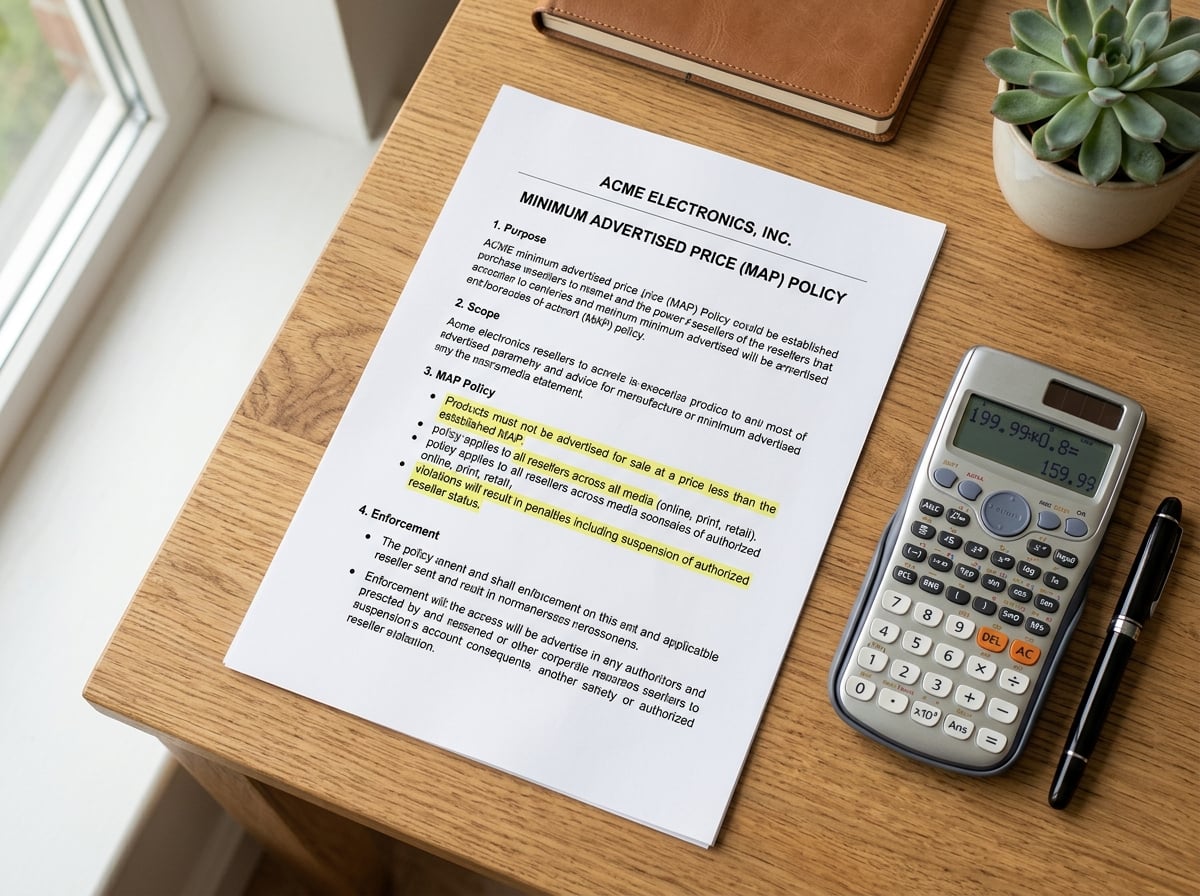
Ask the question that filters the field: “Describe a recent MAP violation and what you did about it.” A supplier who can name the violator, the date, the warning, and the eventual termination is enforcing. By contrast, a supplier who answers in generalities is not. Furthermore, LIBULBS publishes the full MRP and territory rights structure so distributors can read it before the call.
2. Territorial Exclusivity Language in the Trade Agreement
Territorial exclusivity must appear in the executed contract, not the marketing deck. Look for a defined geography (state, ZIP set, metro area), explicit carve-outs (national accounts, online direct sales, e-commerce platforms), and a written remedy if a sister distributor sells into your zone. The remedy is the test of seriousness.
In addition, distributors with written exclusivity report meaningfully wider margins than those operating in open territories. That is a structural outcome of pricing peace, not a sales line. For context, read the deeper analysis in the territorial exclusivity guide.
3. Documented Project Bid Protection Process
Bid protection is a clause that registers an active commercial project under one distributor so the supplier will not quote the same fixtures to a competing reseller during the bid window. Ask for the registration form, the protection duration (30, 60, or 90 days is typical), and the exact response the supplier sends when a second distributor inquires about the same job.
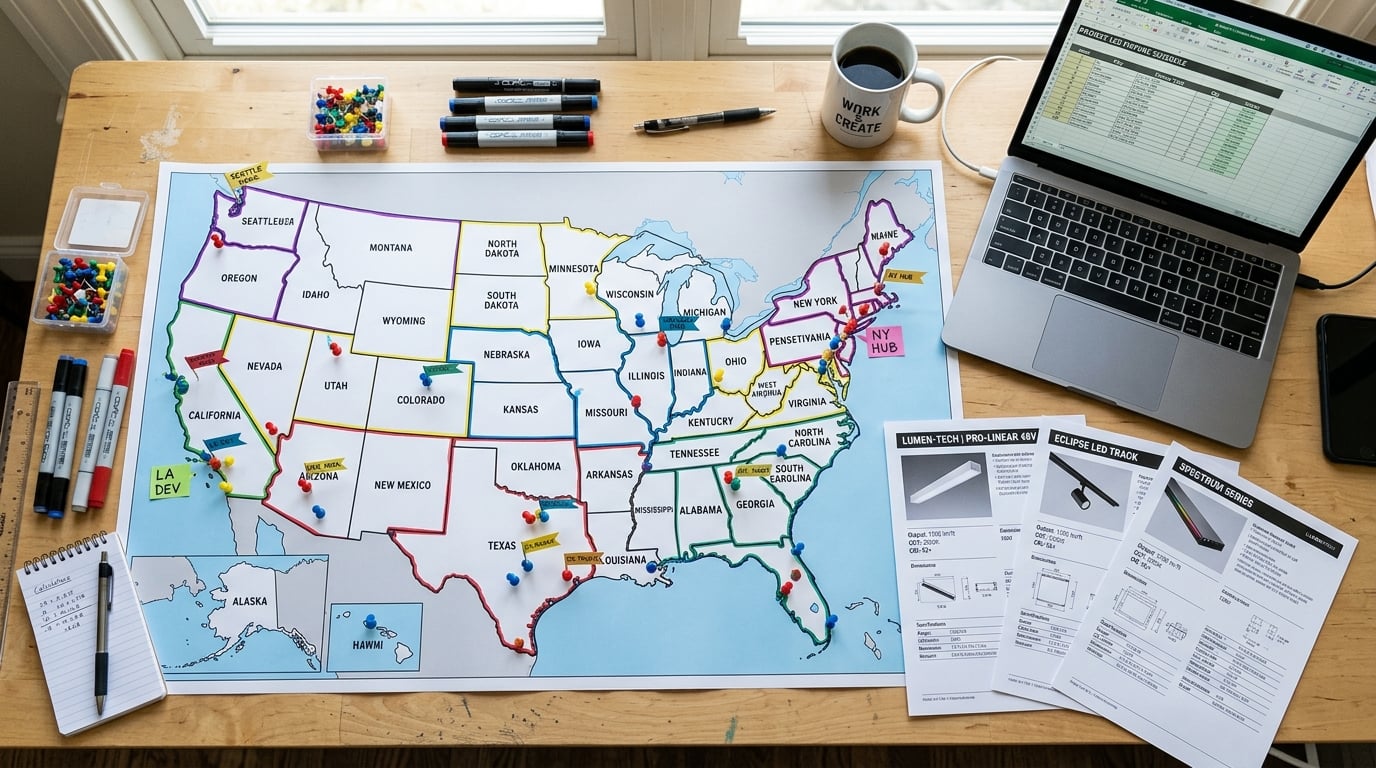
If the supplier cannot show the form, there is no process. If there is no process, there is no protection. More questions to put on the table during the first call.
4. DLC and UL Certifications on the Fixtures You’ll Quote Most
DLC and UL listings are not nice-to-haves. DesignLights Consortium lists every qualifying fixture by manufacturer model number, and end customers use that list to claim utility rebates. UL Solutions handles safety listing.
For each top-volume SKU on the supplier’s catalog, ask for the QPL link. If a fixture is listed under a private label or a different brand than the one you’ll resell, ask why. Specifically, that gap can mean a relabel of an unlisted product, which jeopardizes rebate paperwork later. Meanwhile, the ENERGY STAR commercial program follows similar rigor for adjacent overlap categories.
5. Real Warranty Terms (Years + Claim Process)
A 5-year warranty that takes 90 days to process a claim is not a 5-year warranty. Get four data points on every line you’ll carry: the years covered, the failure modes included, the claim turnaround in business days, and whether resolution is credit, replacement, or “Replace First” (replacement upfront, credit applied after defective return).
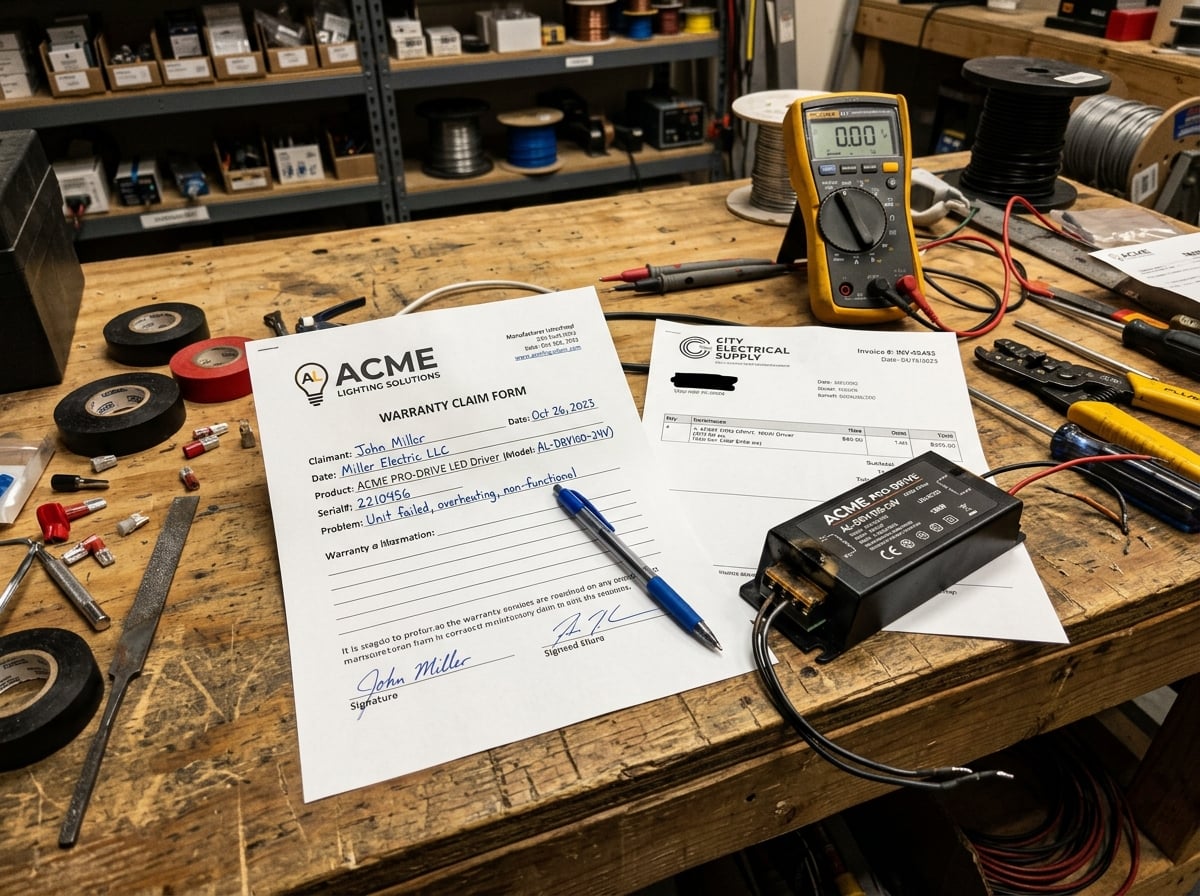
LIBULBS uses a credit-note model with a Replace First option for active jobs. As a result, Acorn Recognition’s Q1 2026 driver-failure claim cleared in 7 business days under that policy, based on our reconciliation of the case file. Ask any prospective B2B led lighting partner for one named customer reference whose claim was processed in the past 90 days.
6. Payment Terms in Writing (Net 15, Net 30, COD)
Net 15 and Net 30 are the baseline. Some suppliers require COD on the first three orders before extending credit. Some never offer terms above $25,000 in open balance. Therefore, get the credit limit, the terms, the early-pay discount (often 1-2% Net 10), and the late-fee structure in writing before you forecast project cash flow against the wrong assumption.
The NFIB primer on Net terms is a useful reference if you’re new to negotiating supplier credit.
7. In-Stock Rate and Same-Day Shipping Cutoff
Ask for the in-stock rate by SKU family. Anything under 85% on top movers signals an order-and-pray model. Confirm the same-day cutoff in local time (2 PM EST is common; 4 PM is impressive), the carriers used, and whether next-day delivery is available in the markets you cover.
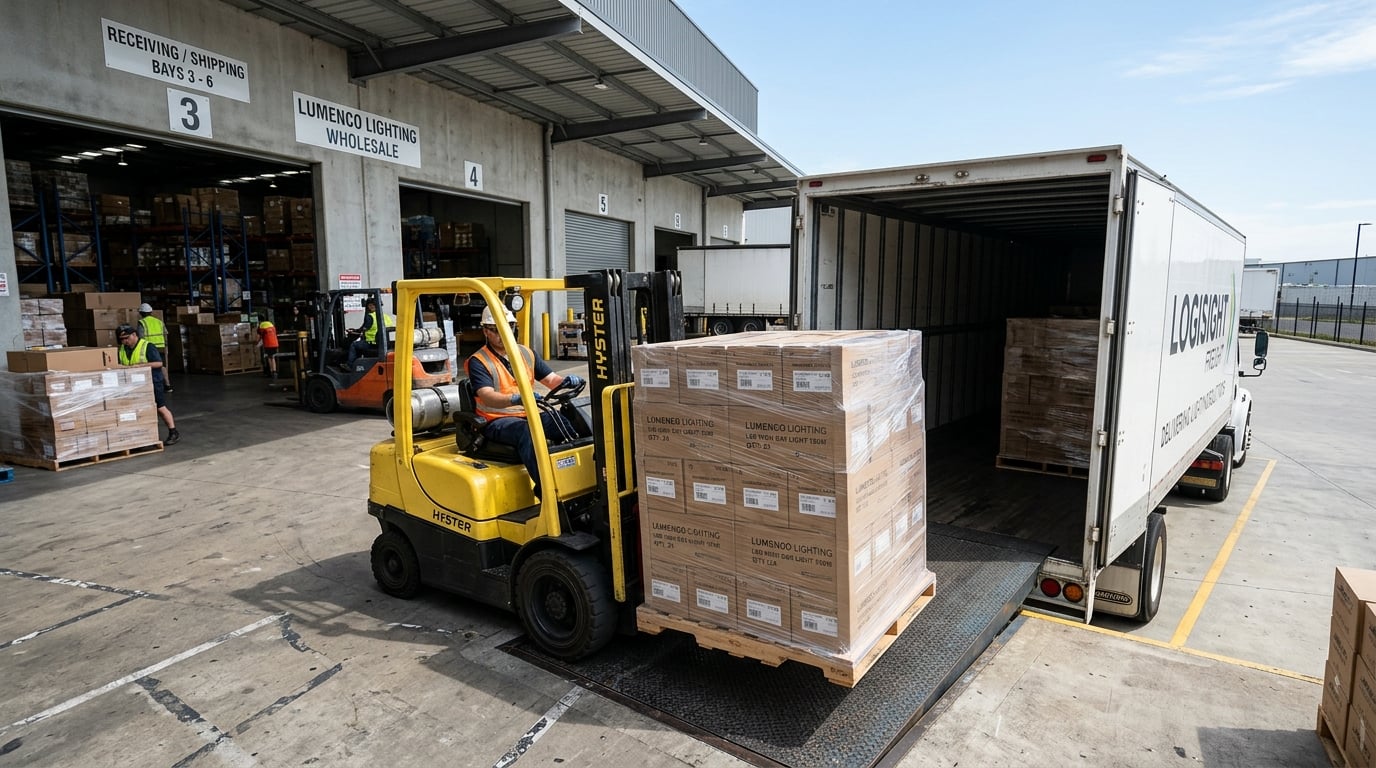
During our visit to the LIBULBS Rehoboth Beach warehouse, Justin Tan’s logistics team cleared 142 pallets for First State Fleet Service on March 9, 2026, with a same-day cutoff at 2 PM. Consequently, numbers like that are testable. Vague ranges like “1-3 weeks” usually mean drop-ship from overseas.
8. Local Delivery Coverage and Lead Times
Same-day shipping is a national service. Local delivery is a regional advantage. Ask which metros the supplier covers with next-day or same-day local delivery, the cutoff time for that service, and the cost (free, flat rate, or per-mile). LIBULBS covers Queens, Brooklyn, Manhattan, and parts of New Jersey out of the East Coast hub.
However, if the supplier cannot delivery-promise on a project deadline, the contractor will. That risk is yours to absorb unless the agreement says otherwise.
9. Blind Shipping and White-Label Capability
Blind shipping hides the supplier from the end customer. Confirm three layers: outer cartons, packing slips, and tracking emails. Partial blind shipping defeats the purpose because one branded layer reveals the source. White-label labeling is a separate service. In particular, ask about per-SKU setup fees and minimum quantities.
10. Minimum Order Quantities and Order Tiers
Get the MOQ in dollars and units, and get the tier breakpoints in writing. Some suppliers structure pricing as Tier 1 ($0-$10K monthly), Tier 2 ($10K-$50K), Tier 3 ($50K+). Others quote a flat distributor list. The flat-list model is simpler. The tiered model rewards consolidation but punishes test orders.
For a new B2B led lighting partnership, look for a supplier that lets you start small without locking pricing to a tier you cannot hit yet.
11. Catalog Depth Across Commercial Categories
A supplier with 80 SKUs is a niche player. A supplier with 400-plus is a one-stop catalog. Map the supplier’s categories against your active project mix: panels, troffers, high bays, vapor tights, wall packs, pole lights, flood lights, canopies, recessed downlights. Gaps in any category will force a second supplier relationship, which fragments your warranty paperwork.
For comparison context, see the best LED lighting distributor programs for contractors review.
12. Returns, RGA, and Restocking Fees
Read the return policy before you read the warranty. RGA (Return Goods Authorization) windows of 30 days are common; 60-90 days for overstock returns is generous. Watch for restocking fees in the 15-25% range, exclusions for “non-stock” or “configured” items, and freight responsibility on returns. A reseller cannot absorb a 25% restocking fee on a customer-driven cancellation and stay solvent.
13. Co-Op Funds, Demo Units, and Marketing Support
Real wholesale led lighting distributors invest in their channel. Ask whether co-op promotional funds are available (typical structure: 1-2% of trailing 12-month purchases), whether demo units ship at cost or free, and whether digital assets, counter displays, and email templates are provided.

This is the difference between a vendor and a partner. A vendor sells boxes. A partner helps you sell more of them.
14. Account Manager Access and Response Time
Get the account manager’s direct phone, direct email, and the published response SLA. “We’ll get back to you” is not an SLA. Two business hours during the work day is the standard you should expect from a serious led lighting supplier. Ask for the backup contact when the primary is unavailable.
15. Manufacturer of Record and Country of Origin
Know who actually makes the product. A wholesale LED lighting distributor may be the brand on the box, the importer of record, or both. CBP country-of-origin marking rules apply, and federal projects often require Buy American Act compliance. Beyond this, LIBULBS has Made-in-USA manufacturing arriving on a planned schedule. Ask any supplier where their drivers, LEDs, and housings are made, and whether DLC listings reflect the current sourcing.
How to Pressure-Test the Checklist During Onboarding
The checklist is only as honest as the way you use it. Three tactics turn the document from a wish list into diligence:
Send it before the demo. Suppliers who answer in writing before showing slides are signaling a different posture. The ones who say “let’s talk through it on the call” are buying time to massage the answer.
Ask for one named reference per item. “Who’s a current distributor we can call about your bid protection process?” If no name surfaces, the process probably isn’t load-bearing yet.
Request the executed agreement template. Not the summary. The actual MSA you’ll sign. Then compare it against the checklist line by line. Anything in the answers but missing from the contract is missing, period.
For the philosophical case behind this approach, see our note on distributor vs direct-manufacturer trade-offs and the buyer-side criteria piece.
What a Strong “Pass” Looks Like
A wholesale led lighting distributor who answers all 15 in writing, with named clauses and a sample contract, is in the top quartile of the field. We have evaluated dozens of supplier programs internally over the past three years; perhaps four to six fit that description without significant follow-up.
If you’re vetting a led lighting supplier and they object to written answers, that is the most useful piece of data you’ll collect this quarter.
Frequently Asked Questions
What is the most important item on an LED lighting distributor checklist?
Written MAP or MRP enforcement is the single most useful diligence signal. A vendor who can describe a prior enforcement action in detail is a vendor who actually defends pricing. A supplier who deflects the question is signaling future erosion of your margin before you even sign.
Should I ask for territorial exclusivity in writing?
Yes. A clause in a sales deck is not a contract. Territorial exclusivity belongs in the executed trade agreement with a defined geography, a list of carve-outs, and a written remedy if another partner sells into your zone. Distributors with written exclusivity report roughly 24% gross margins versus 11% in overlapping territories.
What payment terms are standard for B2B LED lighting trade accounts?
Net 15 and Net 30 are the baseline for credit-approved trade accounts across reputable wholesale LED lighting distributors. Some suppliers require COD on the first three orders, then convert to Net terms after a credit check. Confirm whether terms are extended from order one or earned over time.
Why does DLC certification matter on a distributor’s catalog?
DLC-listed fixtures qualify the end customer for utility rebates that offset 30% to 50% of fixture cost in many service territories. Without DLC listings the contractor’s bid is structurally less competitive on commercial retrofit work, regardless of unit price.
How do I confirm a wholesale LED lighting distributor’s stock position?
Ask for an in-stock rate by SKU family, the same-day shipping cutoff in local time, and the most recent backorder list. Suppliers with real warehouse depth share these numbers. Vendors who quote lead times in vague ranges are usually drop-shipping from overseas.
Can a B2B LED lighting distributor blind-ship under my brand?
Most established wholesale LED lighting suppliers offer blind shipping at no cost and white-label labeling for an additional setup fee. Confirm whether outer cartons, packing slips, and tracking emails all carry your brand or only the carton labels. Partial blind shipping defeats the purpose.
What is bid protection and how do I verify it?
Bid protection registers an active commercial project under one distributor so the supplier will not quote the same fixtures to a competing reseller. Verify by asking for the registration form, the duration of protection, and the exact step the supplier takes when a second distributor inquires about the same job.