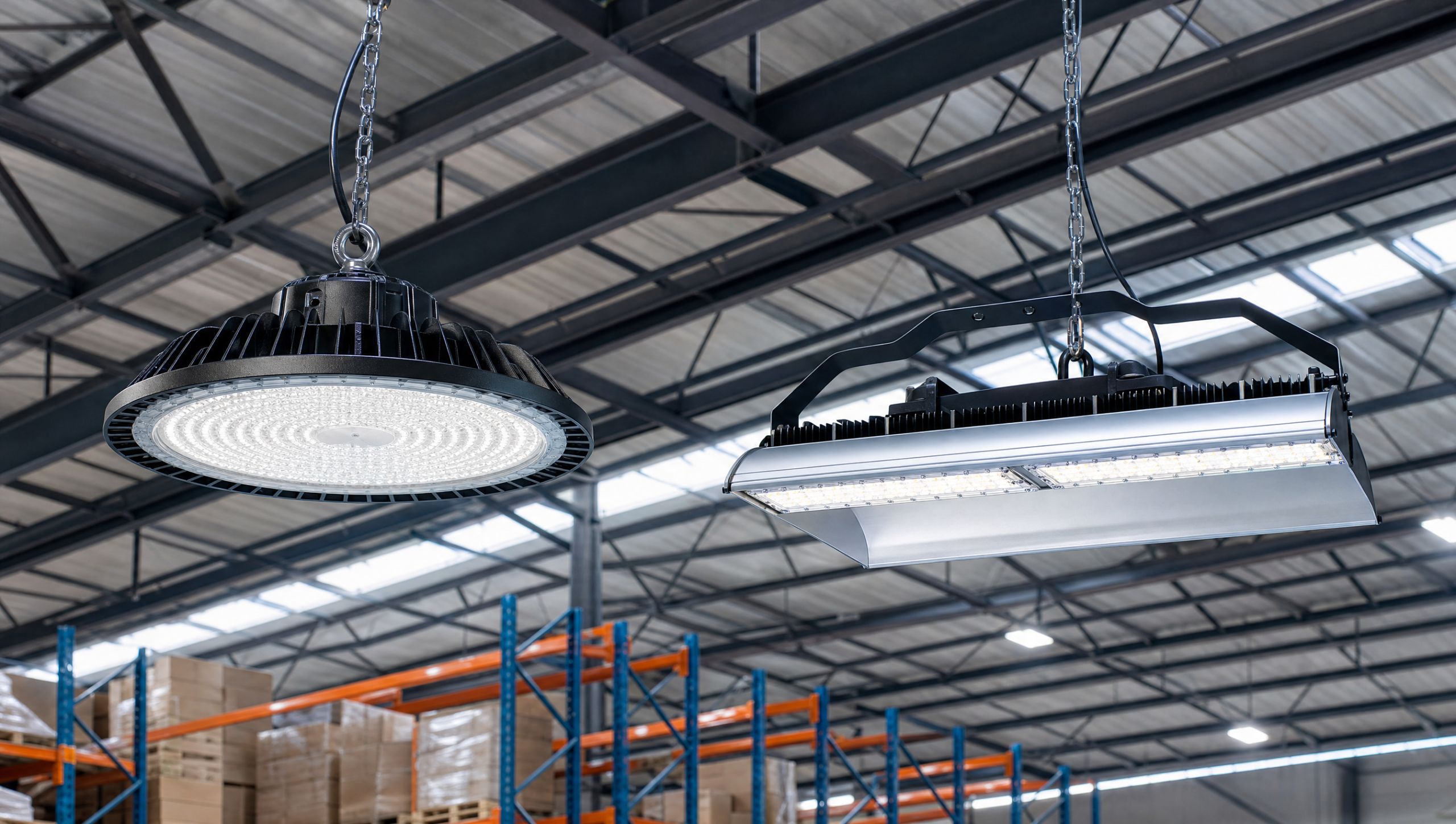

The distributor-versus-manufacturer decision impacts your pricing, delivery speed, technical support, and long-term product consistency. Here is the data that drives the choice.
- Distributors fulfill 68% of commercial lighting orders within 5 business days, while direct manufacturer orders average 17 business days for domestic and 6-12 weeks for international sources (Action Services Group, 2025).
- Direct manufacturer pricing is 8-15% lower per unit on orders above 1,000 units, but adds 15-25% in hidden costs (logistics, customs, quality control) for international sourcing.
- Distributors offer same-day warranty replacements from local stock, while manufacturer claims add 2-4 weeks for return shipping and processing.
- Manufacturers provide true product customization (proprietary designs, custom optics, unique housings) that distributors cannot match from catalog inventory.
- Distributor-manufacturers combine both advantages by offering catalog speed with manufacturing-level product knowledge and pricing flexibility.
Disclosure: LIBULBS operates as both a manufacturer and wholesale distributor of commercial LED lighting. This comparison evaluates both purchasing channels based on publicly available industry data and our operational experience. For editorial questions, contact support@libulbs.com.
Distributor vs Manufacturer: The Core Difference
An LED lighting distributor stocks finished products from one or multiple producers and sells them to contractors, facility managers, and other wholesalers with local inventory, fast shipping, and technical support. A direct manufacturer builds the fixtures and sells them to buyers who order in sufficient volume to justify a direct relationship.
The distinction matters because each channel optimizes for different buyer needs. Wholesalers optimize for speed, flexibility, and support. Factories optimize for cost, customization, and lifecycle consistency. Neither channel is universally better. The right choice depends on your order volume, project timelines, and whether you need standard products or custom specifications.
A third option exists. Some companies operate as both producer and supplier, combining production control with local inventory and fulfillment. This hybrid model is increasingly common in commercial LED lighting because it eliminates the tradeoffs that force buyers to choose one channel over the other.
Fulfillment Speed and Delivery Reliability
Distributors win on speed. According to Action Services Group, 68% of commercial lighting purchases through distributors ship within 5 business days, compared to an average of 17 business days for domestic manufacturer direct orders. International manufacturers extend that timeline to 6-12 weeks, plus customs clearance.
Speed matters more than most buyers realize until the first project deadline arrives. An electrical contractor with a 12-person crew scheduled for a Monday morning installation can’t absorb a 3-week delay. The crew cost alone runs $500-2,000 per day. That single delay can erase the price advantage of buying factory direct.
Wholesalers maintain speed through local or regional warehouse inventory. The product is already in the country, cleared through customs, inspected for quality, and staged for same-day or next-day shipping. The fulfillment process involves picking, packing, and handing off to a carrier. Nothing needs to be produced, imported, or assembled.
Producers ship from production lines. Even domestic factories often operate on a make-to-order basis for anything outside their top 20 SKUs. A 200W high bay in 5000K ships from stock. The same fixture in 4000K with an occupancy sensor triggers a production run with a 10-15 day lead time.
Pricing: True Cost Comparison
Per-unit pricing favors factories on large orders. A wholesaler sells a 200W UFO high bay for $85. The same fixture from the producer prices at $72 per unit on a 1,000-unit order. That’s a 15% savings that looks compelling on a purchase order.
True cost tells a different story. For international producers, add these line items to the per-unit price:
| Cost Category | Typical Range | Notes |
|---|---|---|
| Ocean freight | $3-8 per fixture | Varies by volume, port, and container rates |
| Customs duties | 3-6% of declared value | HTS code dependent; LED fixtures vary by classification |
| Customs brokerage | $150-500 per shipment | Fixed cost per entry, amortized across units |
| Warehouse receiving and storage | $1-3 per fixture | Handling, inspection, put-away |
| Quality inspection | $0.50-2 per fixture | Incoming quality checks on production batches |
| Working capital cost | 2-4% of order value | 30-50% deposit required, 60-90 day cash cycle |
These costs add 15-25% to the per-unit price on a typical international order. The $72 factory fixture becomes $83-90 when fully landed, inspected, and warehoused. The wholesaler’s $85 price includes all of those costs embedded in the markup.
For domestic factory-direct purchases, the hidden cost margin narrows but doesn’t disappear. You still carry the working capital cost of larger minimum orders, the risk of slow-moving inventory on uncommitted stock, and the administrative overhead of managing a direct supply relationship.
Technical Support and Product Knowledge
Producers know how the product is made. Wholesalers know how the product is used. Both types of knowledge matter for different reasons.
A factory’s engineering team can answer questions about LED chip binning, driver topology, thermal management design, and production tolerances. This knowledge is valuable during product specification when you need to understand whether a fixture will perform in a specific application (high-ambient temperature, continuous dimming, extreme vibration).
A wholesaler’s sales and support team answers questions about application fit, code compliance, competitor comparisons, and project-level logistics. They handle the conversation a contractor actually has: “I need 150 high bays for a 40,000-square-foot warehouse with 28-foot ceilings. What wattage, what spacing, and can I get them by Friday?”
The support availability gap also matters. Suppliers staff local or regional support teams operating in your time zone. Many international producers offer technical support during their business hours, which may overlap with yours by only 2-4 hours per day. Urgent questions on a Thursday afternoon get answered Monday morning if you’re buying from a factory 12 time zones away.
Warranty Resolution Speed
Warranty claims reveal the real difference between wholesaler and factory relationships. A supplier with local inventory can ship a replacement fixture same-day. The defective unit gets processed as a warranty claim with the producer, and the supplier absorbs the interim cost.
Direct factory warranty claims follow a different path. The buyer ships the defective fixture back (at buyer expense in most cases), the producer inspects and validates the claim, and a replacement ships back. Round-trip timeline: 2-4 weeks for domestic producers, 6-10 weeks for international.
LIBULBS addresses warranty claims through credit notes applied to future orders rather than requiring physical fixture returns for every claim. The “Replace First” option allows the distributor to purchase the replacement at standard pricing and receive the credit after the defective unit is returned. This keeps the end customer’s project moving while the paperwork catches up.
During a facility tour of the LIBULBS warranty processing center in March 2026, operations manager Justin Tan demonstrated the warranty claim workflow: “We track every claim by fixture serial number, installation date, and failure mode. The data feeds back into our product development process. Last quarter, we identified a driver batch issue affecting 0.3% of a specific troffer model and proactively contacted every distributor who received units from that production run.”
Product Customization Capabilities
Manufacturers hold the clear advantage on customization. If you need a proprietary housing design, a unique optical distribution, a custom driver configuration, or a specific color temperature outside standard offerings, the manufacturer’s engineering team builds it for you.
Customization comes with conditions. Most manufacturers require minimum order quantities of 500-5,000 units for custom specifications. Tooling costs for new housing designs range from $5,000 to $50,000 depending on complexity. Lead times for custom products run 8-16 weeks from engineering approval to first production delivery.
Distributors offer a different form of flexibility: field-selectable options. Modern commercial LED fixtures increasingly include DIP switches or rotary selectors that allow the installer to choose wattage and color temperature on-site. A single high bay SKU might offer 150W/200W/240W selections and 4000K/5000K options, creating six configurations from one product.
This field-selectable approach covers 90% of commercial specification requirements without custom manufacturing. The LIBULBS INFINITY panel series, for example, includes integrated occupancy and daylight sensors with field-selectable CCT and wattage, reducing the need for custom orders while meeting the full range of commercial office lighting specifications.
Need standard products with fast delivery and margin protection? LIBULBS combines manufacturing expertise with distributor-level fulfillment, MAP enforcement, and territorial exclusivity. Apply for a trade account to review the full catalog and pricing.
Minimum Order Quantities and Flexibility
Manufacturers set minimum order quantities (MOQs) to justify production setup, quality control, and logistics. Typical MOQs for LED fixture manufacturers range from 100-500 units per SKU for domestic producers and 500-5,000 units per SKU for international factories.
These minimums create a mismatch for most commercial project work. A 50-fixture office retrofit, a 30-fixture warehouse installation, or a 15-fixture parking lot upgrade all fall below typical manufacturer MOQs. Buying 500 units when you need 50 means carrying 450 units in inventory with no guaranteed timeline for selling them.
Distributors absorb that inventory risk. They purchase in manufacturer-level volumes and break bulk into project-sized quantities. A contractor ordering 50 high bays gets the same product at a competitive price without committing to 10 times the required quantity. The distributor’s inventory investment is amortized across dozens or hundreds of customers.
For distributors evaluating whether to buy from a manufacturer or another distributor, the calculus changes at higher volumes. If your annual demand for a specific fixture family exceeds 2,000 units, a direct manufacturer relationship may lower your per-unit cost enough to justify the inventory commitment and logistics overhead.
Supply Chain Risk and Reliability
Wholesalers with domestic inventory are more resilient to supply chain disruptions than direct factory relationships. Between 2020 and 2023, container shipping rates increased 400-800% at peak, factory shutdowns created 8-16 week production gaps, and raw material shortages (LED chips, aluminum, steel) extended lead times across the industry.
Local stock provided a buffer. When the next container was delayed by six weeks, the wholesaler’s warehouse covered the gap. Direct buyers faced project delays with no local alternative. That’s a risk you can’t price into a purchase order.
The risk profile for direct factory relationships also includes quality consistency. Production samples don’t always match production batches. Color temperature variance, lumen output drift, and driver reliability can differ between the evaluation sample and the 1,000-unit production run. Suppliers who conduct incoming quality inspection on every shipment catch these variances before they reach the end customer.
Diversification provides an additional layer of risk management. Wholesalers sourcing from multiple producers can pivot between vendors when one experiences production issues. A direct buyer locked into a single factory has no fallback position when that producer encounters problems.
The Distributor-Manufacturer Hybrid Model
A growing segment of the commercial LED market operates under a hybrid model where the company both produces and supplies. This structure eliminates the primary tradeoff in the wholesaler-versus-factory decision: you get production-level product knowledge and pricing with supplier-level speed and support.
LIBULBS operates under this hybrid model. The company produces proprietary product lines (INFINITY panels and troffers, proprietary high bays, MLSN strips and stairway fixtures) while maintaining domestic inventory for same-day shipping fulfillment. Partners get wholesale pricing without container-load minimums, 5-year warranties backed directly, and technical support from a team that understands the product from the LED chip to the finished installation.
The hybrid model also enables something pure distributors cannot offer: product development responsiveness. When distributor feedback identifies a specification gap (a specific wattage needed, a mounting option missing, a sensor integration requested), LIBULBS’s advisory board, including LED engineering pioneer John Brennan, can direct that feedback into the product development pipeline. The result appears in the catalog, not on a multi-year product roadmap.
Decision Matrix: Which Channel Fits Your Business
Use this matrix to match your purchasing profile with the optimal sourcing channel for commercial LED lighting.
| Your Situation | Best Channel | Why |
|---|---|---|
| Orders under 200 units per project | Distributor | Below manufacturer MOQ thresholds; distributor absorbs inventory risk |
| Need fixtures within 5 business days | Distributor | Local inventory enables same-day or next-day fulfillment |
| Orders above 1,000 units, predictable recurring demand | Manufacturer direct | Volume pricing offsets logistics cost; predictable demand justifies inventory |
| Custom fixture design required | Manufacturer direct | Engineering team builds to proprietary specification |
| Need MAP enforcement and territory protection | Distributor-manufacturer hybrid | Hybrid programs offer margin protection unavailable in direct purchasing |
| Multiple product families across projects | Distributor | Single source for panels, high bays, vapor tights, outdoor fixtures |
| International sourcing with quality control capability | Manufacturer direct | Eliminates distributor markup if you can manage QC and logistics |
| Multi-phase project over 2-3 years | Manufacturer direct | Lifecycle consistency guarantee on component specifications |
LIBULBS combines manufacturer and distributor advantages. Proprietary product lines, same-day shipping from domestic inventory, MAP enforcement, territorial exclusivity, and 5-year warranties. Apply for a trade account to access wholesale pricing on 444+ commercial LED fixtures.
Frequently Asked Questions
Is it cheaper to buy LED lights from a distributor or a manufacturer?
For orders under 500 units, distributors typically offer better total cost because they absorb shipping logistics, stock locally, and offer flexible payment terms. Direct manufacturer pricing appears lower per unit but adds 15-25% in import costs, customs duties, and extended lead times for international sources. For orders above 1,000 units with predictable demand, manufacturer direct pricing can be 8-15% lower, but only if you can manage the logistics, quality inspection, and minimum order commitments.
How long does it take to receive LED lights from a manufacturer vs a distributor?
Distributors with domestic inventory fulfill 68% of commercial orders within 5 business days, with many offering same-day shipping on in-stock items. Direct manufacturer orders average 17 business days for domestic manufacturers and 6-12 weeks for international manufacturers, not including customs clearance time. For projects with tight installation windows, distributor fulfillment is significantly more reliable.
Can I get customized LED fixtures from a distributor?
Most distributors offer product selection from existing catalog options, including field-selectable wattage and color temperature. True customization (custom housing dimensions, proprietary optics, unique driver configurations) requires working directly with a manufacturer. Some distributor-manufacturers like LIBULBS offer both standard catalog products and manufacturing-backed product development capabilities.
What are the risks of buying LED fixtures directly from an overseas manufacturer?
Primary risks include quality variance between samples and production runs, 6-12 week lead times, customs and import compliance responsibility, limited warranty enforcement across international borders, and minimum order quantities of 500-5,000 units per SKU. Direct import also requires managing UL and DLC certification yourself, which costs $5,000-15,000 per fixture family.
Do LED lighting distributors offer better warranty support than manufacturers?
Distributors generally provide faster warranty resolution because they stock replacement units locally and have established claims processes. A distributor can ship a replacement fixture same-day while processing the warranty claim with the manufacturer. Direct manufacturer warranty claims often require return shipping to the factory, adding 2-4 weeks to resolution time and $25-50 per fixture in shipping costs.
When should I buy LED lighting from a manufacturer instead of a distributor?
Buy direct from manufacturers when you need true product customization (proprietary designs), you order 1,000+ units of a single SKU with predictable recurring demand, you have in-house logistics and quality control capabilities, or you need long-term lifecycle guarantees that the exact same component specifications will be available for multi-phase projects spanning years.