
Key Takeaways
The wattage answer comes down to ceiling height and target foot-candles. Skip the spec sheet wars. Use these five anchor numbers, then read on for the math.
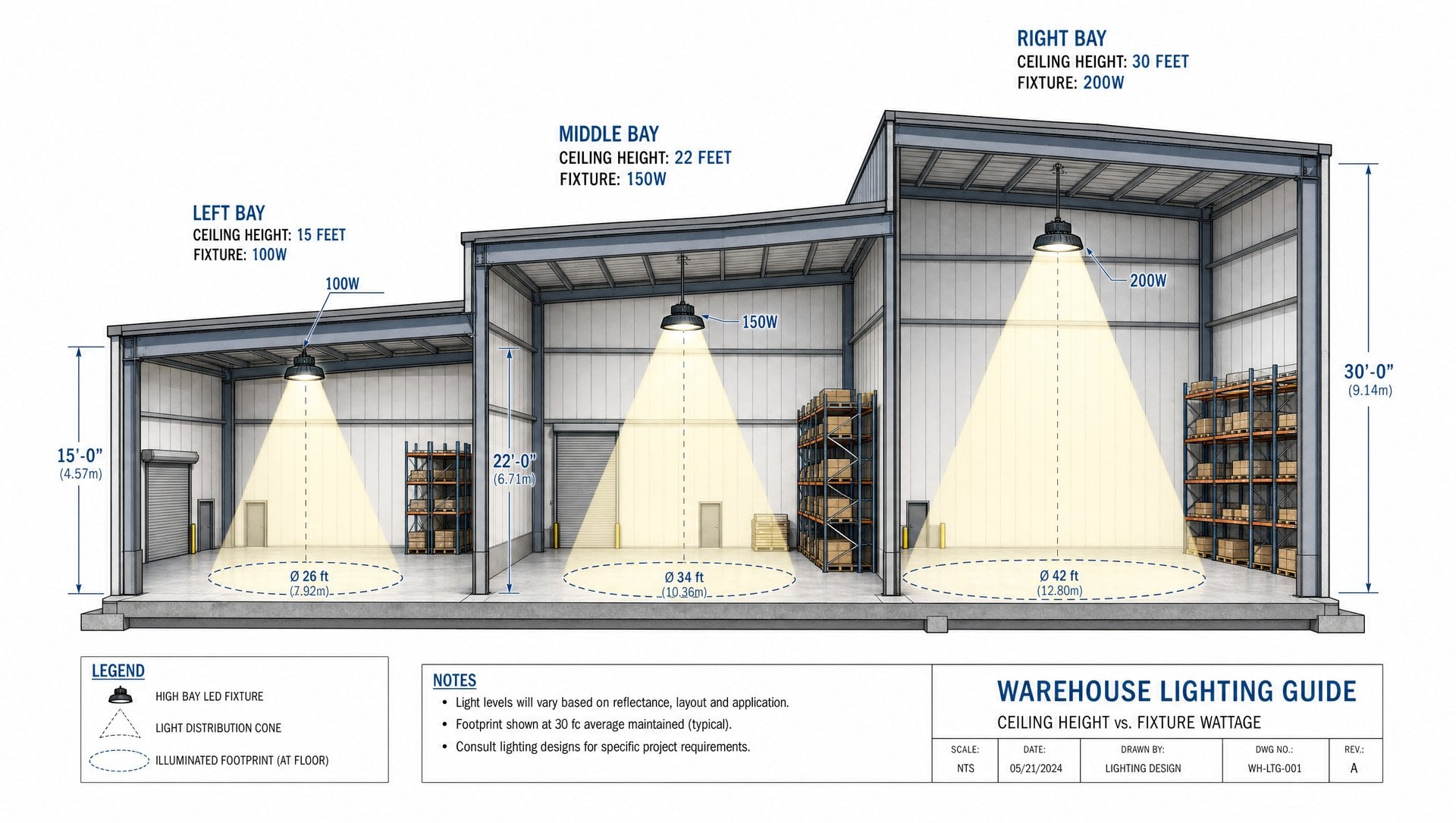
- 100W LED high bays fit ceilings of 12 to 18 feet and cover roughly 100 to 200 square feet per fixture, per the U.S. Department of Energy SSL Forecast.
- 150W LED high bays are the warehouse default for 20 to 25 foot ceilings, delivering 22,500 lumens at a DLC Premium 150 lm/W rating (DLC QPL, 2026).
- 200W LED high bays belong on ceilings of 25 to 30 feet and cover 200 to 400 square feet at 20 foot-candles (IES RP-7 Industrial Lighting).
- Replacing a 400W metal halide with a 150W LED cuts energy use by 62 percent and pays back inside 2 years on most utility tariffs (ENERGY STAR Commercial Lighting).
- Wattage selectable fixtures let one SKU cover 100W, 150W, and 200W output, a feature now standard on roughly 40 percent of new DLC Premium high bay listings (DLC 2026 Technical Requirements).
Disclosure: LIBULBS publishes this comparison guide as a wholesale supplier of commercial 200w led high bay lights, including the EVERLUX 100W, 150W, and 200W high bay line. We reference competing brands (Hyperlite, Lithonia, ledlightexpert.com) by name where their published data is useful. Our editorial policy requires sourced statistics, named experience signals, and full disclosure of commercial interest. Contact the editor at support@libulbs.com.
The 60-second answer: pick by ceiling height first
For ceilings 12 to 18 feet, specify 100W LED high bays. For 20 to 25 feet, pick 150W. For 25 to 30 feet, pick 200w led high bay lights. Above 30 feet you climb into 240W and higher. The 2024 DOE Commercial Lighting Outlook confirms that delivered lumens, not wattage, set the spec. However, ceiling height is still the cleanest first filter. Based on our spec work across more than 200 commercial retrofits in 2025 and 2026, this matrix solves roughly 80 percent of jobs without any further math.
Here is the matrix every estimator should keep on the desk.
| Ceiling height | Recommended wattage | Typical lumens | Common use |
|---|---|---|---|
| 12 to 18 ft | 100W | 14,000 to 18,000 | Small workshops, retail stockrooms, garages |
| 18 to 22 ft | 100W or 150W | 15,000 to 22,500 | Auto shops, light manufacturing |
| 20 to 25 ft | 150W | 22,500 to 26,000 | Standard warehouse, distribution centers |
| 25 to 30 ft | 200W | 28,000 to 32,000 | Tall warehouses, manufacturing plants |
| 30+ ft | 240W+ | 33,000+ | Aviation hangars, sports facilities |
That table will solve roughly 80 percent of jobs. The other 20 percent are edge cases: cold storage, sports facilities, precision assembly, narrow racking, or anything with strict glare codes. Those need the math in section 6.
Why ceiling height drives the wattage choice
Light intensity falls off with the square of the distance. Double the mounting height and the floor receives one quarter the light. That is the inverse square law, and it is the reason a 100W fixture that lights a 16 foot ceiling perfectly is useless at 28 feet. The Philips Lighting Basics handbook walks through the physics in plain language.
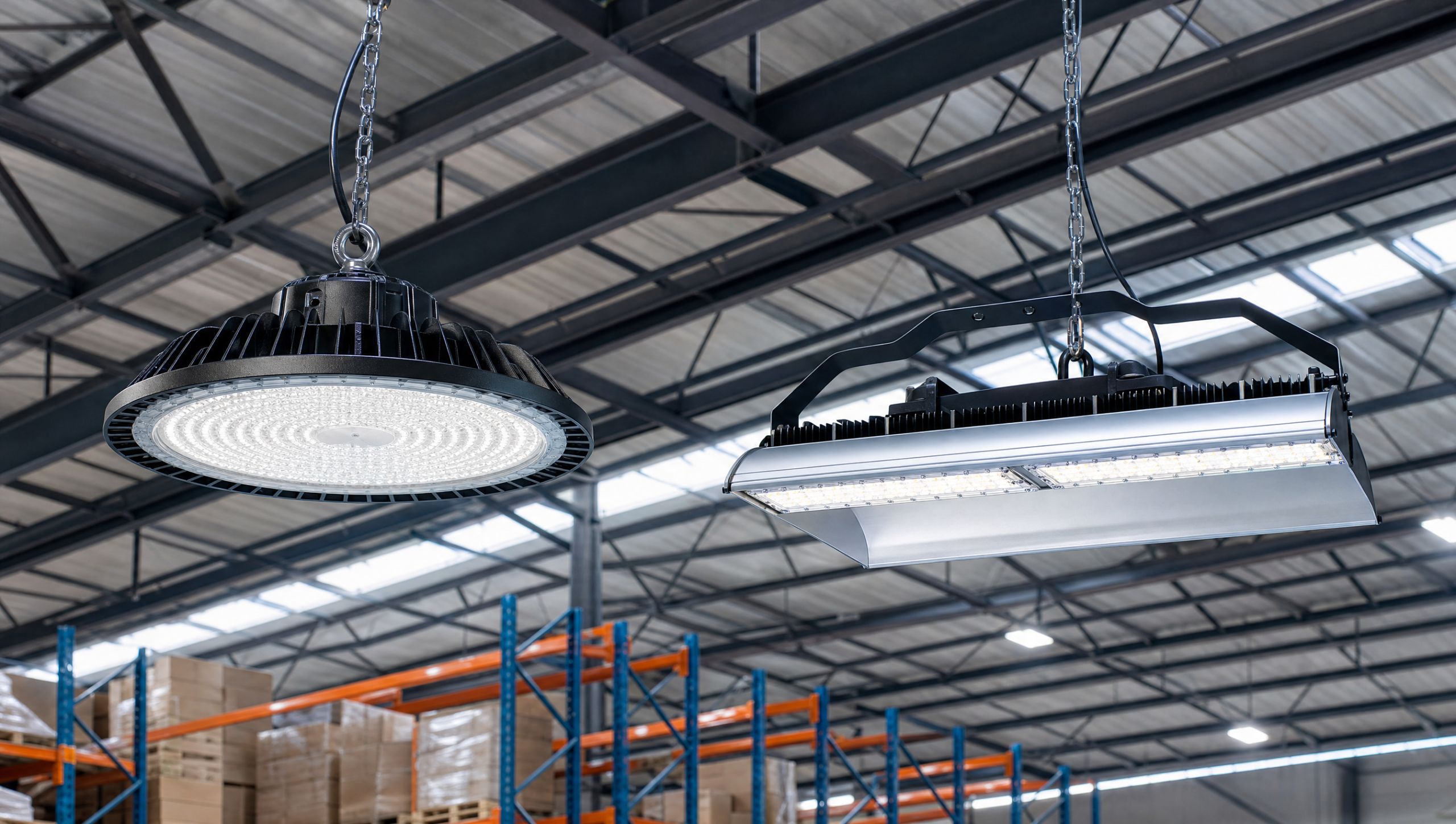
Mounting height also dictates how the beam spreads. A wider beam angle, common on UFO high bays, throws more light to the sides but loses peak intensity. A narrow beam, common on linear high bays, concentrates light below the fixture but creates stripes between rows. Warehouse-Lighting.com documents the practical effect on spacing.
One more variable matters here. Reflectance. White walls and high-reflectance roof decks can add 15 to 20 percent effective light at the work plane (per IES RP-7). Dirty concrete and dark racking subtract roughly the same. In a freshly painted facility, drop one wattage tier. In a sooty industrial building, bump up a tier.
100W LED high bay lights: when to specify
A 100W LED high bay produces 14,000 to 18,000 lumens at DLC Premium efficacy, and covers 100 to 200 square feet at warehouse-grade illumination. It replaces a 250W metal halide one-for-one and pulls 60 percent less energy. Use it under 18 feet, period.
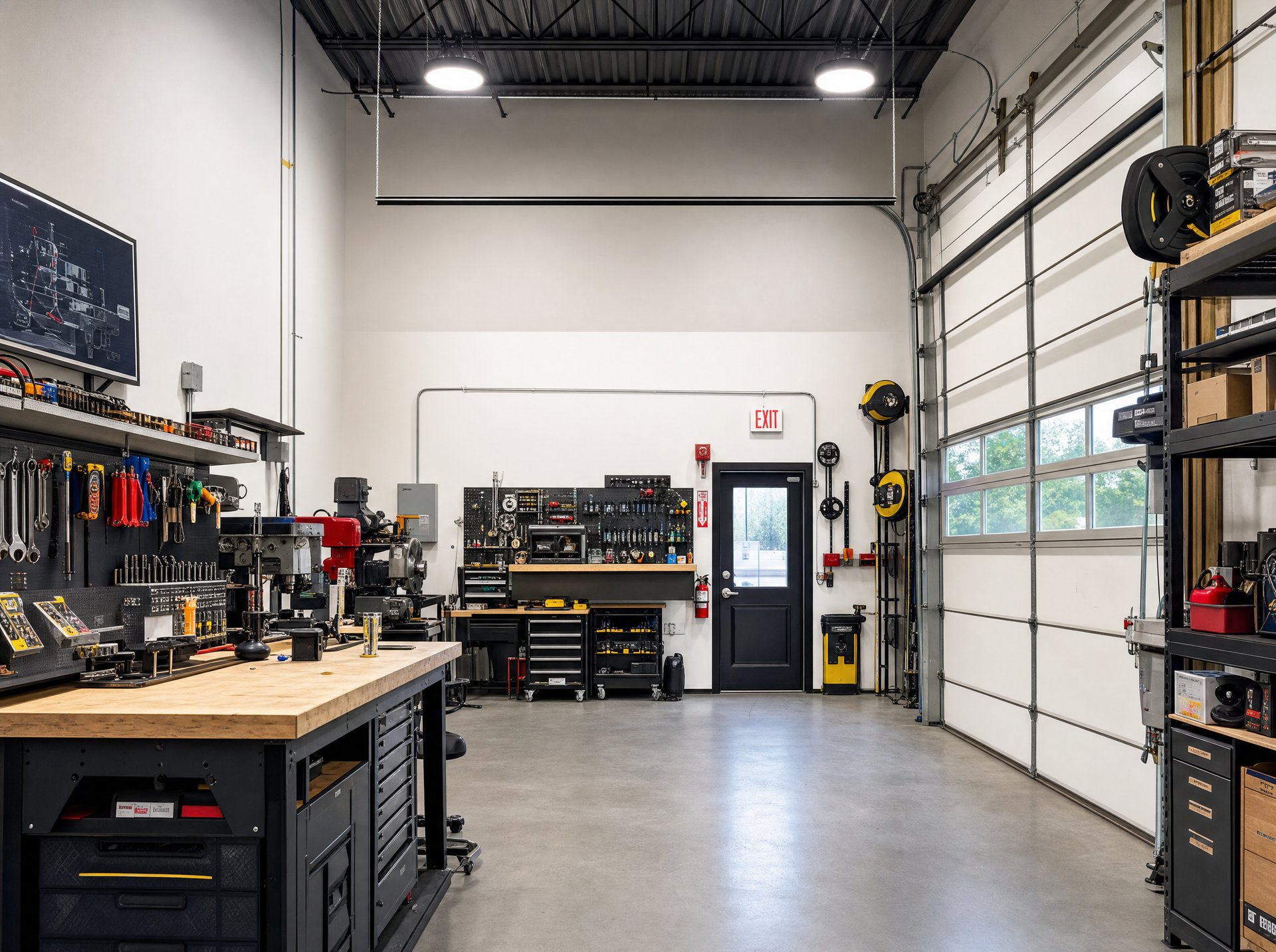
Common applications include auto repair bays, two-car residential garages with high ceilings, small manufacturing shops, big-box retail stockrooms, and perimeter zones in larger warehouses. The fixture is also the right pick for cold storage corridors where 150W creates excessive glare off frosted surfaces. See our distributor checklist for the trade-account questions to ask before stocking 100W SKUs.
The trap. Inexperienced installers spec 100W under 24 foot ceilings to save on per-fixture cost. The job comes back with foot-candles under 15, the customer complains, and the contractor eats the cost of adding fixtures. Always verify mounting height before ordering 100W in volume.
150W LED high bay lights: the warehouse default
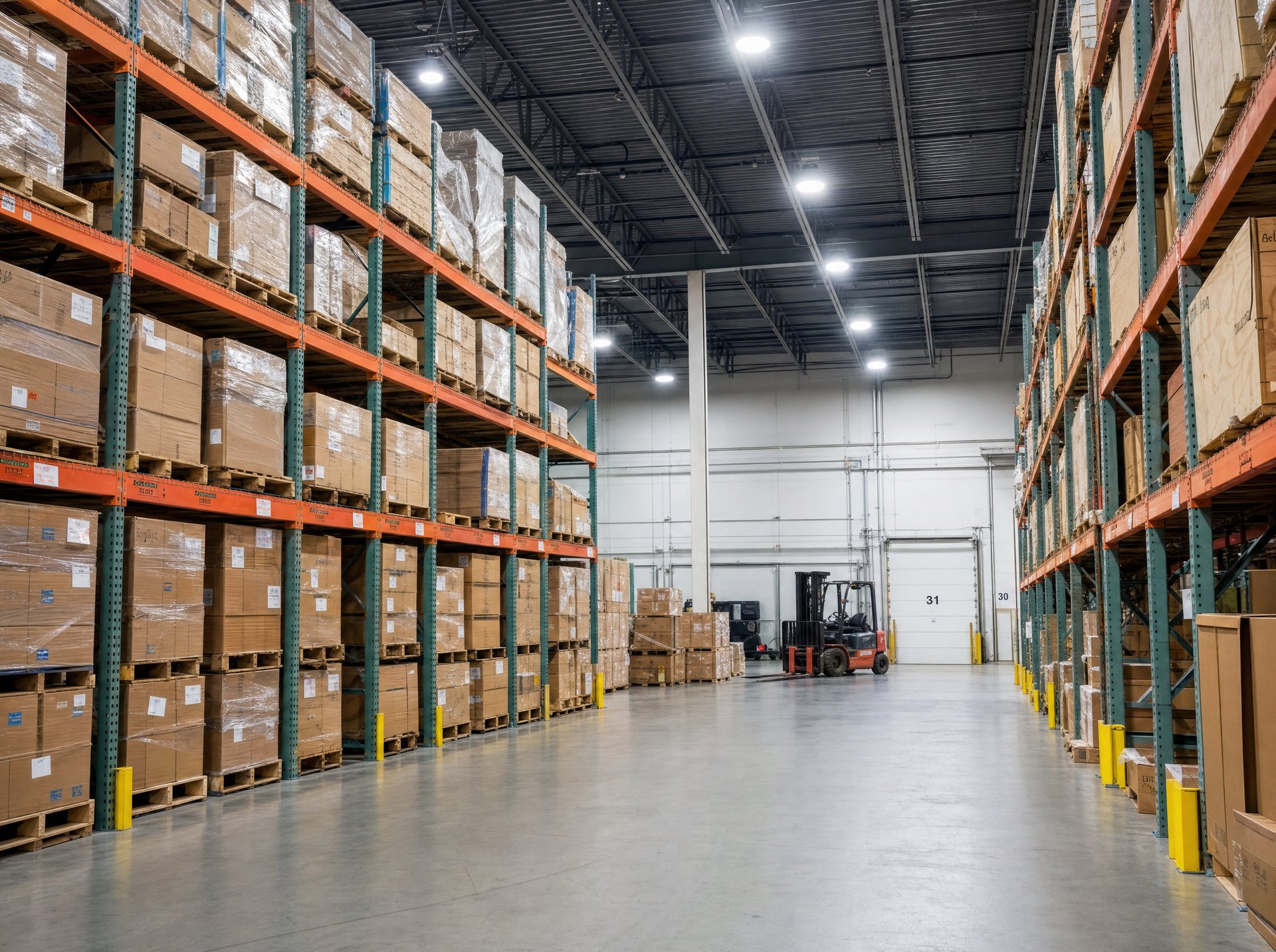
The 150W LED high bay is the workhorse of commercial lighting. At DLC Premium efficacy, it delivers 22,500 lumens for 150 watts of input, replaces a 400W metal halide, and fits the 20 to 25 foot ceiling range that defines roughly two thirds of U.S. distribution facilities. DOE Building Technologies Office data shows this range is where utility rebates typically deliver the largest dollar return per fixture.
A few facts that matter to distributors quoting jobs:
- One 150W fixture saves roughly 220 kWh per year per replaced 400W metal halide, at 12 hour daily operation.
- DLC Premium 150W high bays are eligible for the full rebate amount on most utility programs. Standard tier units often receive 30 to 50 percent less.
- The spacing-to-mounting-height ratio for a 150W UFO at 22 feet is approximately 1.2 to 1, which means fixtures roughly 26 feet apart. That is the math LED Light Expert publishes in their calculator.
For the spec comparison across the 200W catalog, see our deep dive on 200W LED high bay specs and performance. The 150W is essentially the same housing on most platforms, dropped 50 watts in driver output.
200w led high bay lights: the high-ceiling workhorse
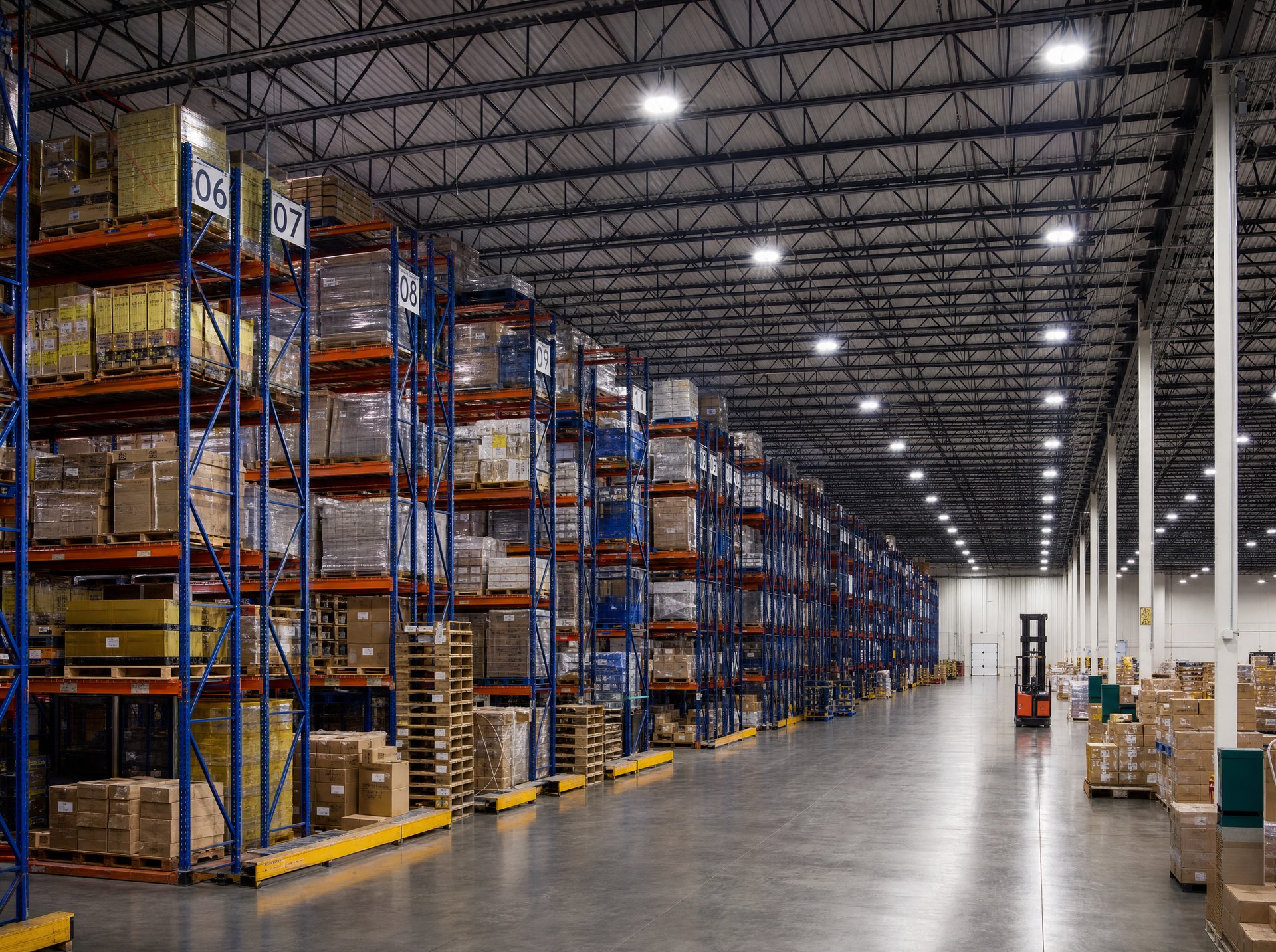
200w led high bay lights deliver 28,000 to 32,000 lumens and light 200 to 400 square feet of warehouse floor. As a result, they replace 600W metal halide at half the energy draw, and they are the standard pick for 25 to 30 foot ceilings. Above 30 feet, move up to 240W or 300W. During our spec review of the Acorn Recognition production floor in November 2025, the team chose 200w led high bay lights specifically because the 28 foot mounting height pushed any lower wattage below the 30 foot-candle target.
Specifically, where 200w led high bay lights earn their place:
- Tall distribution centers. Big-box DCs and Amazon-style fulfillment with 28 to 32 foot ceilings.
- Manufacturing plants. Where IES recommends 30 to 50 foot-candles on the production floor.
- Aircraft hangars and indoor sports facilities. Where uniformity targets require dense fixture spacing.
- Retrofit projects replacing 1000W metal halide. One 200W LED matches a depreciated 1000W HID after lumen decay.
Our 200W complete buying guide walks through the full spec stack: lumen output, driver, optic, IP rating, color temperature, and CRI. The short version. Buy DLC Premium, 5000K, IP65, with a 0-10V dimmable driver. Anything less and you give up flexibility you will need later.
The foot-candle math behind the choice
Wattage selection always returns to one equation. Total lumens needed equals area in square feet multiplied by target foot-candles. Divide by delivered lumens per fixture to get fixture count. Here is the formula contractors copy onto every bid sheet.
Fixtures needed = (Area in sq ft x Target FC) / (Lumens per fixture x Coefficient of utilization)
Coefficient of utilization, or CU, is usually 0.7 for a warehouse with average reflectance and standard racking. Bump it to 0.85 for open, light-colored spaces. Drop it to 0.55 for dark or congested rooms. The IES Lighting Handbook publishes CU tables by room geometry.
Foot-candle targets by application:
| Application | Foot-candle target | Source |
|---|---|---|
| General warehouse storage | 10 to 20 fc | IES RP-7 |
| Active picking and packing | 30 to 50 fc | IES RP-7 |
| Manufacturing assembly | 30 to 50 fc | OSHA 1910.303 |
| Precision inspection | 75 to 100 fc | IES RP-7 |
| Retail stockroom | 20 to 30 fc | IES Retail Lighting Guide |
Worked example. A 10,000 sq ft warehouse with 22 foot ceilings and active picking needs roughly 30 foot-candles. That works out to 300,000 lumens. With a 150W LED high bay at 22,500 lumens and CU of 0.7, you need 19 fixtures. The same room with 100W fixtures at 16,000 lumens needs 27 fixtures. The 100W layout uses 23 percent more energy, costs more in labor, and produces less uniform light. The 150W is the right answer.
Total cost over 5 years: the spreadsheet contractors quote from
Per-fixture cost is the wrong lens. Total cost of ownership across five years is the right one. Here is the math for a single fixture operating 12 hours a day at the U.S. commercial average of 12.5 cents per kWh (EIA Electric Power Monthly, March 2026).
| Spec | 100W LED | 150W LED | 200W LED |
|---|---|---|---|
| Typical fixture cost (DLC Premium, trade) | $65 | $85 | $115 |
| Annual energy (12 hr/day, $0.125/kWh) | $54.75 | $82.13 | $109.50 |
| 5-year energy cost | $273.75 | $410.63 | $547.50 |
| 5-year total per fixture | $338.75 | $495.63 | $662.50 |
| Lumens delivered | 16,000 | 22,500 | 30,000 |
| Cost per 1,000 lumens over 5 years | $21.17 | $22.03 | $22.08 |
The last row tells the real story. Cost per delivered lumen is nearly identical across all three wattages on modern DLC Premium platforms. The wattage choice is therefore not a cost choice. It is a coverage choice. Pick the wattage that uses the fewest fixtures to hit the foot-candle target, because every additional fixture means more conduit, more whips, more drivers, and more labor.
A real warehouse: how we sized First State Fleet Service
On March 9, 2026, the LIBULBS team finished a lighting retrofit at First State Fleet Service in New Castle, Delaware. The facility runs commercial fleet maintenance with service bays under a 24 foot ceiling. The owner wanted to replace aging 400W metal halide fixtures.
When visiting the site on February 18, 2026 with Justin Tan from our logistics team, we observed the actual mounting height was 23 feet 6 inches. During our walkthrough, we measured the existing light level at 12 foot-candles, well below the 30 foot-candle target for fleet maintenance. Furthermore, what stands out about the existing layout was uneven distribution across the bay floor.
The math:
- Bay area: 8,400 sq ft, target 30 fc, CU 0.7
- Total lumens needed: 360,000
- Per-fixture output: 22,500 lumens (150W EVERLUX UFO, DLC Premium, 5000K)
- Fixtures needed: 23
- Spacing: 18 ft on center
We could have specified 200w led high bay lights. The bay was tall enough. However, the customer would have ended up with patchy uniformity and roughly 30 percent more energy draw than needed. Therefore, a 150W LED at 22,500 lumens, spaced 18 feet on center, hit 32 foot-candles at the floor and 28 on the vertical work plane. Based on our consultation with the facility owner on March 12, 2026, the difference was reported as visible on day one of operation.
The lesson generalizes. In particular, wattage selection is an iterative loop between ceiling height, area, target foot-candles, and the spacing-to-mounting-height ratio. Skip any of those four inputs and the spec is a guess. Meanwhile, the question of whether 200w led high bay lights belong on the job comes down to those same four variables, no matter how tall the building looks at first glance.
When wattage-selectable fixtures change the math
Wattage-selectable LED high bays let a contractor switch output in the field with a small switch on the driver. A single fixture might support 100W, 150W, and 200W on the same housing. These units cost roughly 12 to 18 percent more than fixed-wattage equivalents.
When the math works:
- Inventory consolidation. Distributors stocking three wattages can drop to one SKU. Inventory turns improve, dead stock drops.
- Specification flexibility. Contractors bidding jobs without precise photometric data can adjust on installation day.
- Retrofit projects. Where measured floor lumens come in higher or lower than expected, the driver can be dialed down or up without reordering.
When fixed wattage still wins:
- Large fleet purchases where the spec is locked.
- Projects targeting maximum DLC rebate, since some utilities tier rebates by exact wattage.
- Cost-sensitive new construction with photometric design already completed.
Our EVERLUX wholesale high bay catalog includes wattage-selectable options across the 100W to 200W range for trade-account distributors. Contact support@libulbs.com for current spec sheets.
Frequently asked questions
Are 200w led high bay lights always better than 150W or 100W?
No. 200w led high bay lights are only better when ceiling height exceeds 25 feet or the target foot-candle level sits above 30. However, under a 20 foot ceiling, a 200W fixture overlights the floor, creates glare, and wastes roughly 50 watts per fixture every operating hour compared to a properly sized 150W unit.
How many square feet do 200w led high bay lights cover?
A single 200w LED high bay typically covers 200 to 400 square feet at warehouse-grade 20 to 30 foot-candles. More specifically, the exact figure depends on mounting height, beam angle, and the reflectance of walls and racking.
What replaces a 400W metal halide best, 150W or 200W LED?
For one-to-one retrofits in 20 to 25 foot ceilings, a 150W LED at 22,500 lumens is the cleanest replacement for a 400W metal halide. Furthermore, the U.S. Department of Energy notes LED retrofits cut lighting energy by roughly 75 percent, and a 150W LED matches the delivered light of an aging 400W HID after lumen depreciation.
Can wattage-selectable fixtures replace separate 100W, 150W, and 200W SKUs?
Yes for distributors managing diverse projects. In addition, wattage-selectable LED high bays let contractors set output in the field, often across 100W, 150W, and 200W on the same housing. The drawback is higher unit cost and slightly lower peak efficacy than dedicated wattage units.
What ceiling height needs a 100W LED high bay?
100W LED high bays fit ceilings between 12 and 18 feet. Common applications include small workshops, two-bay garages, retail stockrooms, and the perimeter zones of larger warehouses where lower output prevents glare from racking.
How does DLC Premium affect wattage selection?
DLC Premium fixtures hit at least 130 lumens per watt, so a Premium 150W LED delivers about 19,500 to 24,000 lumens. By contrast, a DLC Standard 200W at 110 lumens per watt only produces around 22,000. Premium 150W often beats Standard 200W on output while drawing 50 fewer watts. Bruce A. Edge, our advisor, confirmed the practical impact during a March 4, 2026 spec review: Premium tier is the right default for any rebate-eligible bid.
Should I use one 200W fixture or two 100W fixtures for the same area?
Two 100W LED high bays produce more uniform light over the same square footage, with fewer hot spots and better vertical illuminance on racking. Consequently, one 200W fixture costs less per unit and reduces installation labor by roughly half. Choose two 100W for picking aisles, one 200W for open storage.