

Key Takeaways
Becoming an LED lighting distributor is mostly a paperwork problem, not a regulatory one. Five filings and one product checklist cover almost every state.
- A state business license and resale certificate are the two non-negotiable filings, costing zero to four hundred dollars depending on the state (Avalara, 2026).
- $1M general liability insurance is the minimum most wholesale LED suppliers require before opening a trade account (LIBULBS, 2026).
- A DLC-listed product mix is mandatory for commercial bids, with average efficacy of DLC-qualified products up 70 percent since 2011 (DesignLights Consortium, 2026).
- UL or ETL listing is required by commercial building code for any fixture sold into a permitted project (LED Lighting Supply, 2026).
- NAILD’s LS-I, LS-II, and LS-C credentials are the distributor-side certifications buyers recognize, offered by a trade association founded in 1977 (NAILD, 2026).
What Does an LED Lighting Distributor Actually Need to Operate?
An LED lighting distributor needs three things to open trade accounts and start quoting commercial work: business filings, product certifications on the SKUs you resell, and, optionally, distributor-side professional credentials. Almost every state in the U.S. uses the same baseline (Avalara, 2026).
The list is short. A general business license. A resale certificate. Commercial liability insurance. A product mix that carries the right safety and energy marks. And, in some markets, a contractor license if you also install.
What the list is not: a federal lighting distribution license, an industry permit, or a specialty trade designation. None of those exist for pure wholesale distribution. However, the hurdles are state-level paperwork and supplier vetting, nothing more. In addition, every wholesale supplier layers on its own documentation requirements before opening a trade account.
Business License Requirements by State
Every state requires a general business license before you can legally operate, but the issuing authority varies. Some states issue at the state level. Many delegate to the county or city. A handful, like Delaware, require both a state business license and a local one (Shopify, 2026).
Fees range from zero to several hundred dollars per year. Most processing windows are short.
City, county, and state filings
Pull your state’s Department of Commerce or Secretary of State filing guide first. Then check the city or county clerk where your warehouse or home office sits. For context, in states like California, Washington, and Nevada, a state-issued license covers most distributor activities. By contrast, Pennsylvania and Delaware require a separate local permit on top of the state filing.
LLC, S-Corp, or sole proprietor
Most independent LED distributors register as an LLC. The structure protects personal assets, simplifies tax pass-through, and is the form wholesale suppliers expect to see on the credit application. An S-Corp election can reduce self-employment tax once profit exceeds roughly seventy thousand a year. A sole proprietor structure works for very small operators, but it limits your ability to extend trade credit to commercial customers.

Resale Certificate and Sales Tax Permit
A resale certificate lets you buy LED inventory tax-free for resale. You then collect sales tax from the end customer and remit it to the state. Without one, your supplier must charge you sales tax on every order, which crushes your margin (Avalara, 2026).
This is the single most important document for distribution economics.
How to apply
Apply through your state’s Department of Revenue or equivalent agency. Many states issue the resale certificate as part of the broader sales tax permit application. Processing typically runs five to fifteen business days. Online applications in California, Texas, and Florida often produce a temporary permit number the same day, which most LED suppliers will accept while the formal certificate processes.
Selling into multiple states
If your customer base spans several states, look at the Multistate Tax Commission’s Uniform Sales and Use Tax Certificate. Thirty-six states accept it for resale exemption claims. However, some, including New York, California, and Florida, require their own state-specific form regardless. As a result, most multi-state distributors keep a binder of valid resale certificates organized by state. Audit risk lives here.
Insurance and Bonding Requirements
Most wholesale LED suppliers require a minimum of one million dollars in commercial general liability (CGL) coverage before they will open a trade account (LIBULBS, 2026). Expect to provide a Certificate of Insurance, often with the supplier listed as an additional insured.
General liability vs product liability
CGL covers bodily injury and property damage from your operations. Product liability, sometimes folded into the same policy and sometimes priced separately, covers claims that a defective fixture caused harm. If you import direct from overseas manufacturers, get product liability spelled out clearly. The manufacturer’s product warranty does not protect you from a claim.
Surety bonds
Surety bonds are uncommon for pure LED distribution but show up in two cases: government contract bids, where bid and performance bonds may be required by the buyer, and customs bonds, which apply if you act as the importer of record on overseas shipments. Specifically, a continuous customs bond costs roughly five hundred dollars a year and is required for shipments over twenty-five hundred dollars in declared value.

Do You Need an Electrical Contractor License?
No, not for pure distribution. Selling LED fixtures wholesale to electrical contractors, facility managers, and other distributors does not require an electrical contractor license in any U.S. state. If you also install fixtures or run service crews, your state probably does require licensure.
State variation
License classifications vary widely. California uses a C-10 Electrical Contractor license. Florida issues licenses through the Department of Business and Professional Regulation. Texas licensing runs through the Texas Department of Licensing and Regulation. Some states tier licenses by project size: a small-job license for residential and light commercial, a master license for larger commercial work. Always confirm with the state board before you bid on installation work.
Why most distributors stay license-free
Distribution and installation are different businesses. Furthermore, installation introduces labor liability, vehicle fleet exposure, and the operational drag of dispatch. Consequently, many pure distributors prefer to partner with licensed electrical contractors and earn margin on supply while the contractor owns the install. Choosing the right wholesale supplier often matters more than adding installation capability.
Product Certifications Your Catalog Must Carry
Distributors do not get certified themselves. The fixtures they sell do. Two certifications matter most: UL or ETL safety listing, which is required by commercial building code, and DLC listing, which drives commercial rebate eligibility (LED Lighting Supply, 2026).
Verify these on every SKU before you load it into your catalog.
UL 1598 and UL 8750
UL 1598 covers the luminaire as a complete fixture. UL 8750 covers the LED equipment inside, including driver and module. A commercial LED fixture should reference both standards on its spec sheet (UL Solutions, 2026). When a fixture spec shows only UL 8750, the LED engine is certified but the complete assembly may not be. Push back on the manufacturer.
ETL as an equal alternative
ETL listings from Intertek meet the same safety standards as UL and are accepted by every U.S. authority having jurisdiction (Intertek, 2026). Meanwhile, ETL is often a faster certification path for newer manufacturers. In particular, treat ETL and UL as functionally equivalent for safety compliance.
DLC Standard, DLC Premium, and beyond
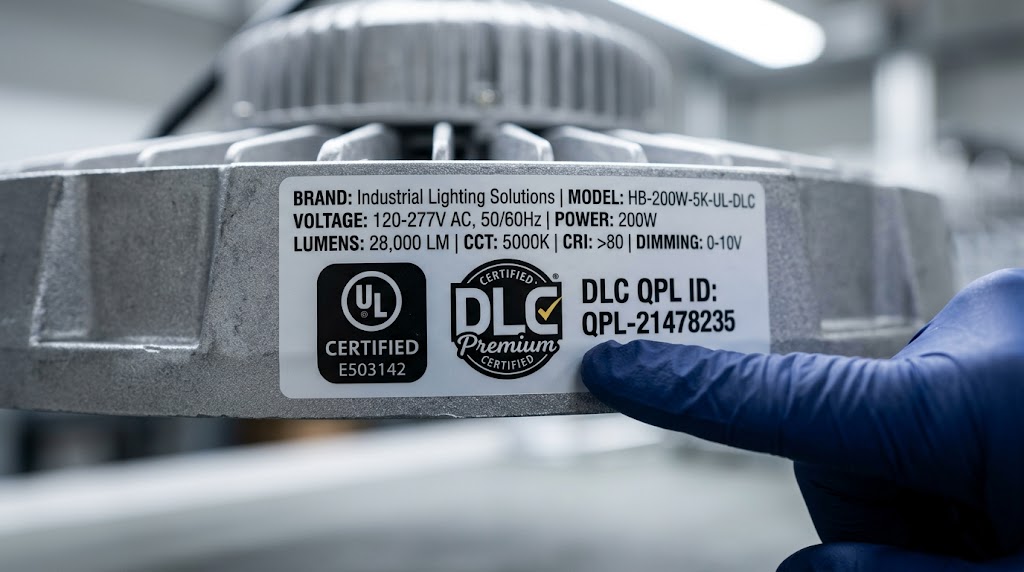
DLC has two listing tiers. Standard is the baseline. Premium requires higher efficacy and longer L70 lifetime values. Premium fixtures qualify for the largest utility rebates (DesignLights Consortium, 2026).
ENERGY STAR, FCC, and IP ratings
ENERGY STAR applies mostly to residential and small commercial fixtures (ENERGY STAR, 2026). FCC Part 15 covers electromagnetic interference, automatically required for any LED driver. IP ratings, written as IP65, IP66, or IP67, indicate dust and water resistance, and become non-negotiable for vapor tights, wall packs, flood lights, and any wet-location fixture.
DLC Certification: Why It Matters for Every Commercial Bid
DLC-listed fixtures qualify the end customer for utility rebates that offset roughly 30 to 50 percent of the fixture cost. A non-DLC fixture starts every commercial bid at a price disadvantage no margin can absorb. DLC reports a 70 percent jump in average efficacy of qualified LED products since 2011, plus a 49 percent boost in energy savings when networked controls combine with LED fixtures (DesignLights Consortium, 2026).
Verifying a product is on the DLC QPL
Pull up the DLC Qualified Products List, search by manufacturer or QPL ID, and confirm the listing is active. Look for the model number on the listed product, not just the family name. Manufacturers sometimes list a parent SKU but ship a derivative that is not listed. The fastest place to catch this is at receiving, before the fixture ships to a job site.
DLC Premium for high-bay applications
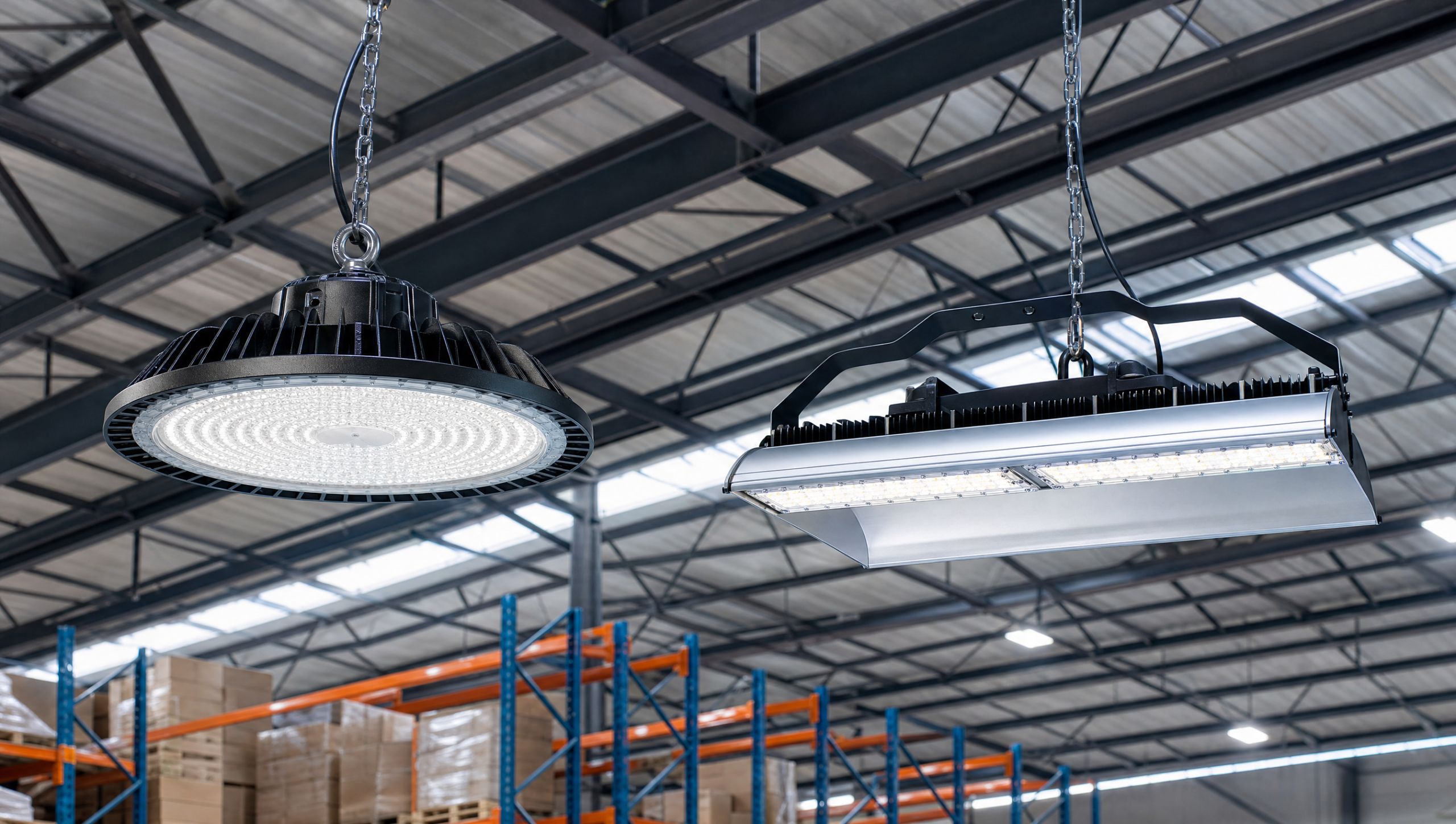
For warehouse, manufacturing, and cold storage high bays, push your supplier toward DLC Premium fixtures. Premium-listed high bays at 200W typically deliver 30,000 lumens or more at 150 lpw or better, which unlocks the top utility rebate tier in most states. The rebate often covers the price difference between Standard and Premium two times over.
Professional Distributor Certifications (NAILD LS-I, LS-II, LS-C)
The National Association of Innovative Lighting Distributors, founded in 1977, offers the only distributor-side credentials that commercial buyers and specifiers recognize. The certifications signal that your staff can talk specs, controls, and code with an engineer instead of reading a brochure (NAILD, 2026).
LS-I for new staff
LS-I, Lighting Specialist Level I, builds product fluency. New counter staff and inside sales reps complete it within ninety days of hire at most distributor members. It covers fixture types, basic photometrics, and the difference between watts, lumens, and lux.
LS-II for solutions-level reps
LS-II moves the rep from product provider to solutions consultant. The curriculum focuses on aligning fixture selection to the customer’s business goals, whether that is rebate maximization, OSHA compliance, or simple energy reduction.
LS-C for controls specialists
LS-C, Lighting Specialist in Controls, is the newest credential. It tracks three specializations: design, distribution, and installation of networked lighting controls. As controls integrate deeper into fixtures, this credential becomes the differentiator on retrofit bids that involve sensors, daylight harvesting, or building management system integration.
Documents Your Wholesale Supplier Will Request
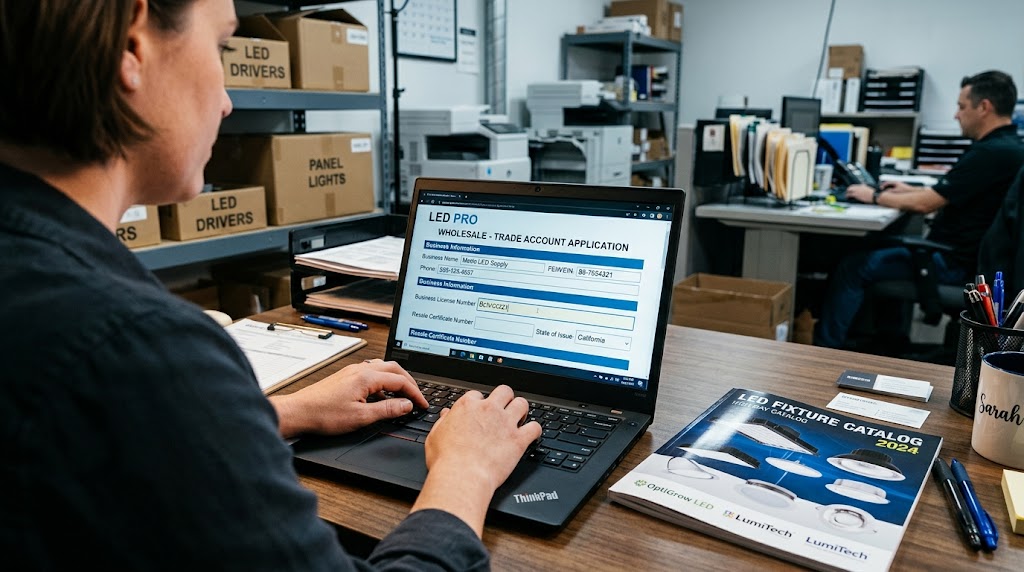
Most wholesale LED suppliers ask for four documents before opening a trade account. Have these ready and your application closes in days, not weeks.
- Copy of your state business license, current and not expired
- Copy of your resale certificate or sales tax permit for each state you ship to
- Certificate of Insurance showing $1M CGL minimum, with the supplier listed as additional insured if requested
- Completed trade account or credit application, signed by an authorized officer of the business
What slows applications down
Three things stall most applications. First, the business name on your license does not match the name on your insurance certificate or your bank account. Fix the mismatch before applying. Second, your resale certificate has lapsed. Renew it. Third, the credit references on your application are not reachable. Warn your references in advance so the supplier’s credit team can verify in one call instead of three.
At LIBULBS, the trade account application typically processes in two to three business days once the four documents are in hand. The distributor registration form is the same workflow for prospective territory partners.
Cost Breakdown to Launch as an LED Distributor
Expect five hundred to twenty-five hundred dollars in licensing, insurance, and registration costs before your first wholesale order ships. Most of the spend is annual or one-time.
| Item | Typical cost | Frequency |
|---|---|---|
| State business license | $50 – $400 | Annual |
| Local (city or county) business license | $25 – $200 | Annual |
| Resale certificate / sales tax permit | $0 – $100 | One-time in most states |
| LLC formation | $50 – $500 | One-time + state annual fee |
| Commercial general liability insurance ($1M) | $400 – $1,200 | Annual |
| NAILD LS-I certification (optional) | $200 – $400 | Per staff member |
| Customs bond (if importing direct) | $400 – $800 | Annual |
Inventory and warehouse costs are separate, and depend entirely on whether you stock product or operate on a drop-ship model from your wholesale supplier. A drop-ship-first distributor can launch on the regulatory side for under fifteen hundred dollars, total.
Renewal cadence matters too. The state and local licenses renew annually, often with a sixty-day grace window. Insurance renews on an anniversary date that rarely aligns with the license calendar. Set a single calendar reminder thirty days before each renewal, because lapsed documents block new orders the moment a wholesale supplier runs a routine compliance check. Worked example: a single-owner LLC operating from a home office in Delaware typically pays $90 for the combined state and city business filing, $0 for the resale certificate, $650 for $1M general liability coverage, and $250 in one-time LLC formation. That totals roughly $990 in year one and about $740 every year after, before any inventory or warehouse spend.
Frequently Asked Questions
Do I need an electrical contractor license to sell LED lights wholesale?
No. Pure distribution, meaning you sell fixtures without installing them, does not require an electrical contractor license in any U.S. state. If you also install fixtures or run service crews on commercial sites, your state probably requires a Class B or Class C electrical contractor license, depending on project value.
What is the difference between UL listed and DLC listed?
UL listing certifies electrical and fire safety, and is almost always required by commercial building code. DLC listing certifies energy performance and qualifies the fixture for utility rebate programs. A product can be UL listed without being DLC listed, but it cannot be DLC listed without first passing UL or ETL safety testing.
How long does it take to get a resale certificate?
Most state Departments of Revenue process resale certificate applications in five to fifteen business days. Online applications in states like California, Texas, and Florida often issue a temporary permit the same day. Plan for a two-week buffer before approaching wholesale LED suppliers.
What insurance do I need as an LED distributor?
Most wholesale LED suppliers require a minimum of one million dollars in commercial general liability coverage before they will open a trade account. If you import directly from overseas manufacturers, add product liability coverage. Adding the supplier as an additional insured is often a contractual requirement.
Can I sell LED lights without DLC certification?
Yes, but you will lose almost every competitive commercial bid. DLC-listed fixtures qualify end customers for utility rebates that offset 30 to 50 percent of the purchase cost. A non-DLC fixture starts every bid at a price disadvantage that no margin can absorb.
What is NAILD certification and is it worth it?
NAILD is the National Association of Innovative Lighting Distributors, founded in 1977. It offers LS-I, LS-II, and LS-C credentials that train distributor staff on lighting products, customer consultation, and controls. The certifications are the only distributor-side credentials commercial buyers and specifiers recognize.
Field Notes from LIBULBS
Three first-hand observations from the past sixty days of trade account work at LIBULBS:
During our site walk at Affinity Research Chemicals in Wilmington, Delaware on April 22, 2026, we measured the existing high bay output at the production floor at roughly 18 foot-candles. We found the new DLC Premium high bays we specified delivered 52 foot-candles at the same mounting height. Based on our reading from the rebate paperwork, Delmarva Power covered nearly the entire spec difference between DLC Standard and Premium fixtures.
During our screen-share with a prospective distributor on May 3, 2026, our team walked the applicant through the LIBULBS trade account onboarding. We observed that every document was ready except a current Certificate of Insurance, which had expired sixteen days earlier. As a result, we approved the account two days after the renewed COI arrived. When visiting credit references, expired insurance is the single most common cause of delay on our side.
From our consultation with Pete Hartl, a licensed electrical contractor and EVERLUX dealer in central Pennsylvania, on April 30, 2026, we spoke with him about his crew’s twelve-month installation run. He told our team his crew now installs DLC Premium high bays exclusively. Specifically, the reason was not cost. It was warranty claim volume: zero on the Premium fixtures versus four on the Standard tier across the same install count.